

Ceratotherium simum
- noun
- Specialized
- Wildlife reserves in Africa are working to protect the remaining Ceratotherium simum from extinction.
Examples
-
Due to poaching, the population of Ceratotherium simum has dramatically declined in recent decades.
-
The Ceratotherium simum is the largest species of rhinoceros in the world.
-
The Ceratotherium simum is one of the largest rhinoceros species.
-
Did you know that the Ceratotherium simum can weigh over 2,000 kilograms?
-
Wildlife reserves in Africa are working to protect the remaining Ceratotherium simum from extinction.
-
Due to poaching, the population of Ceratotherium simum has dramatically declined in recent decades.
-
The Ceratotherium simum is the largest species of rhinoceros in the world.
Synonyms
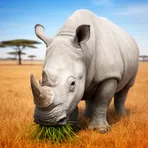
A very large light grey African animal with two horns that eats grass

A large light grey African rhino with two horns that is now endangered
Surface Forms
Morphology
Ceratotherium + simum
This Latin binomial combines a genus name 'Ceratotherium' (given as a group of large African rhinoceroses) with a species epithet 'simum' which has no dictionary definition here; a learner who knows the genus would reasonably infer it names a kind of rhinoceros but would not be able to derive the specific common name or conservation status. Taxonomic binomials are formally compositional (genus + species) and thus give partial cues across languages, but the species-level meaning requires specialist knowledge, so the expression is only partially transparent to a B1 learner.
Etymology
Ceratotherium simum may come from old Greek and Latin words: Ceratotherium means 'horned beast' and simum means 'flat-nosed'. This simple picture — a large, horned animal with a broad, flat mouth — helps explain why this name is used for the white rhinoceros.

