
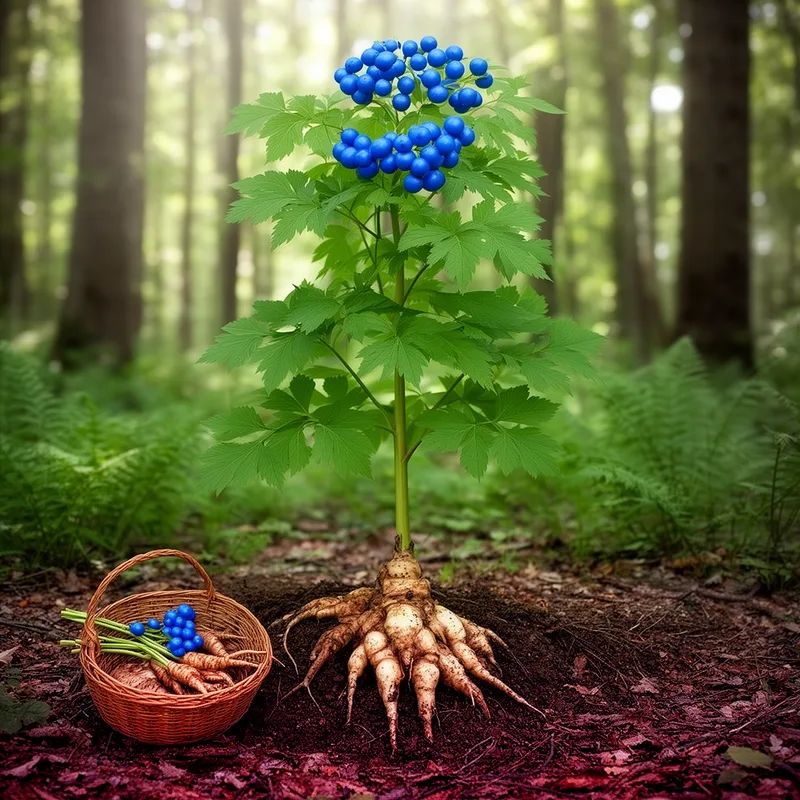
Caulophyllum thalictroides
- noun
- /kɔːloʊˈfɪləm θəˈlɪktrɔɪdiz/
- Specialized
- The roots of Caulophyllum thalictroides were once used in traditional medicine by Native Americans.
Examples
-
Gardeners appreciate Caulophyllum thalictroides for its ornamental blue berries and lush foliage.
-
Researchers are studying potential compounds found in Caulophyllum thalictroides for new medicinal applications.
-
The Caulophyllum thalictroides plant can be found in many forests.
-
Do you know about Caulophyllum thalictroides?
-
The roots of Caulophyllum thalictroides were once used in traditional medicine by Native Americans.
-
Researchers are studying potential compounds found in Caulophyllum thalictroides for new medicinal applications.
-
Gardeners appreciate Caulophyllum thalictroides for its ornamental blue berries and lush foliage.
Synonyms

A tall woodland plant with blue berries and a thick root once used in medicine
A tall plant with blue berries and a thick root used as medicine
A tall plant that lives many years and has blue berries and thick knotted roots once used as medicine

A tall plant with blue berries and thick roots once used as medicine

A tall plant from eastern North America and Asia with blue berries and a thick root used as medicine
A tall herb with blue berries and a thick knotty root once used as medicine

A thick root from the blueberry plant once used in traditional medicine
Surface Forms
Morphology
Caulophyllum + thalictroides
This is a Latin binomial (genus + species) whose parts are technical/Latin rather than ordinary English words; a B1 learner knowing the listed constituents would not be able to infer the descriptive plant meaning. The species epithet 'thalictroides' is not a common dictionary word and its morphological clues (e.g. the Greek/Latin -oides 'resembling') require specialist botanical knowledge, so the overall meaning is not derivable from the parts.
Etymology
Caulophyllum thalictroides may come from Greek words: caulo meaning 'stem' and phyllum meaning 'leaf', because the plant's large leaves seem to grow right from the stem. The ending thalictroides means 'like Thalictrum', a meadow plant, so the full name is simply a description of how the plant looks today.

