

Carya illinoensis
- noun
- /ˈkɛr.i.ə ˌɪl.ɪ.nəʊˈɛn.sɪs/
- Specialized
- The Carya illinoensis is highly prized for the quality of its nuts, known as pecans.
Examples
-
Farmers in Texas extensively cultivate Carya illinoensis for commercial nut production.
-
Botanists study the genetics of Carya illinoensis to improve pecan yields.
-
The Carya illinoensis tree produces delicious nuts.
-
I planted a Carya illinoensis in my backyard.
-
Farmers in Texas extensively cultivate Carya illinoensis for commercial nut production.
-
The Carya illinoensis is highly prized for the quality of its nuts, known as pecans.
-
Botanists study the genetics of Carya illinoensis to improve pecan yields.
Synonyms
 7
3.2
7
3.2

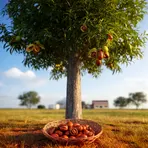
A tall tree that produces smooth brown nuts used for food
 2
2.7
2
2.7
A large tree that loses its leaves and produces edible nuts people eat
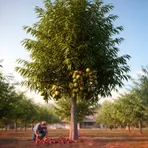
A large tree that grows in the southern United States and Mexico and produces edible pecans
Surface Forms
Morphology
Carya + illinoensis
This is a scientific Latin binomial (genus + specific epithet). The second element 'illinoensis' is a Latin-form epithet (not a common English word) and is not listed in the learner dictionary, so a B1 learner who knows the surface constituents would not reliably infer 'pecan tree' or the cultivation/nut meaning. Although 'Carya' denotes a genus of hickory/pecan, taxonomic names and Latin epithets are specialized and non-compositional for general learners, making the expression opaque.
Etymology
Carya illinoensis is the scientific name for the pecan tree. The word Carya comes from an old word for 'nut' and illinoensis means 'from Illinois', so the name points to the tree that gives the edible nuts called 'pecans'.