
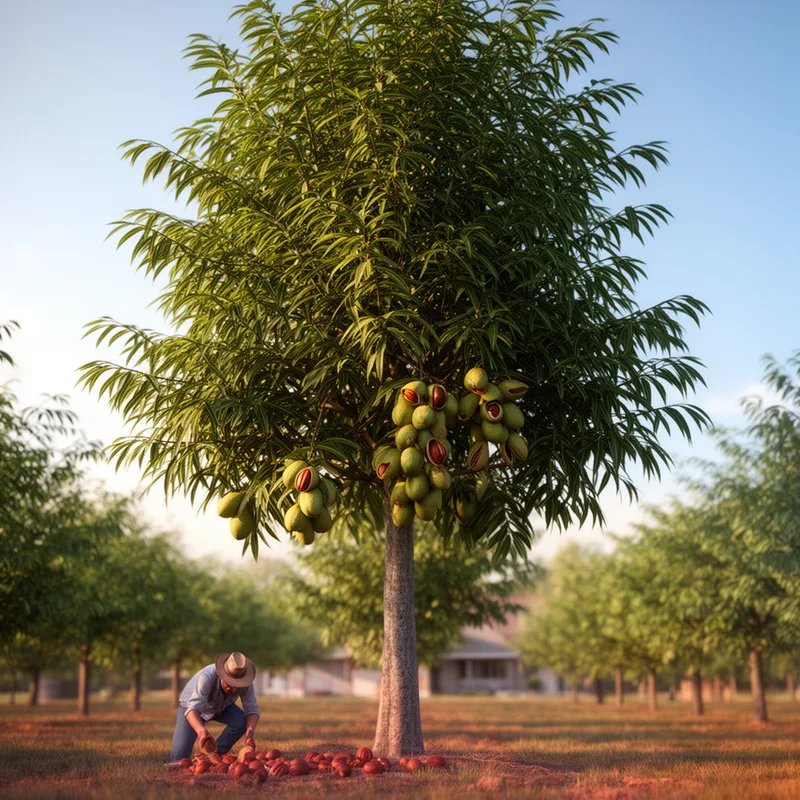
Carya illinoinsis
- noun
- /ˈkɛr.i.ə ˌɪl.ɪˈnɔɪ.sɪs/
- Specialized
- The Carya illinoinsis, commonly known as the pecan tree, grows well in southern climates.
Examples
-
The Carya illinoinsis is prized for producing delicious pecans in southern orchards.
-
The leaves of Carya illinoinsis are long and pinnate, giving the tree a distinctive appearance.
-
Farmers in Texas often plant Carya illinoinsis for both shade and nut production.
-
The Carya illinoinsis thrives in warm climates.
-
Many farmers cultivate Carya illinoinsis for its nuts.
-
Farmers in Texas often plant Carya illinoinsis because it produces delicious pecans.
-
In many southern orchards, Carya illinoinsis is cultivated for its valuable edible nuts.
Synonyms
 7
3.2
7
3.2

A tall tree that produces smooth brown nuts used for food
 2
2.7
2
2.7
A large tree that loses its leaves and produces edible nuts people eat

A large tree that produces edible nuts called pecans
Surface Forms
Morphology
Carya + illinoinsis
This is a scientific Latin binomial name: the second element is either non-standard or a Latinized place/species epithet ('illinoinsis' is not a common English word and is listed as not found). A B1 learner who knows the literal constituents would not be able to derive the common meaning 'pecan tree' from these technical/Latin elements, so the expression is not compositionally transparent to such learners.
Etymology
Carya illinoinsis is the formal name for the pecan tree: Carya comes from an old Greek word for a nut and illinoinsis means 'from Illinois', where early writers noted the tree. So the name gives a simple picture—a nut tree 'from Illinois'—which explains why this tree is known for producing 'pecans'.