
C horizon
- noun
- Specialized
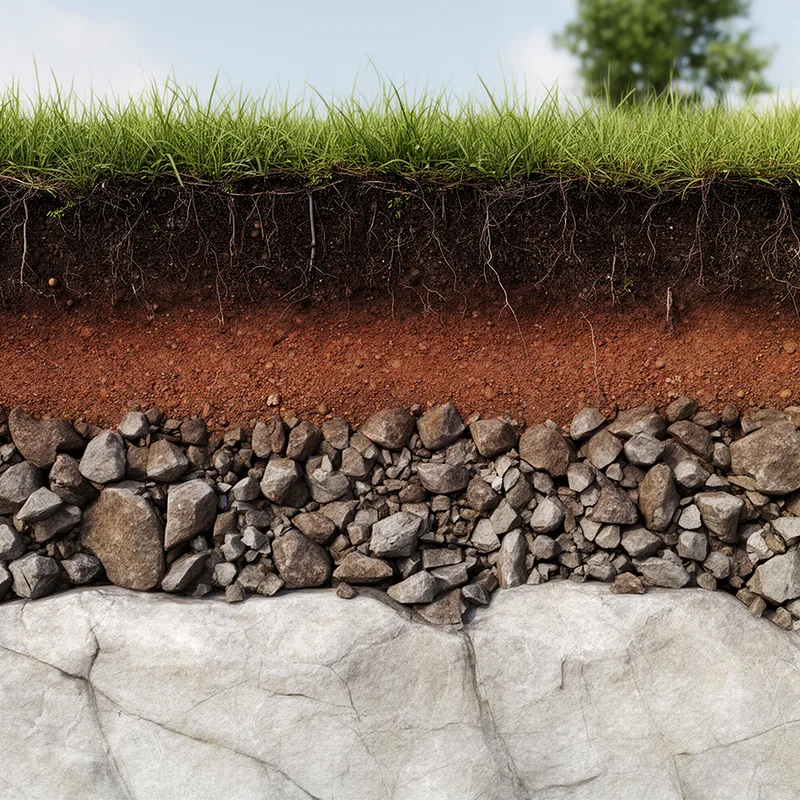
- The C horizon consists mainly of weathered rock and is located beneath the B horizon.
Examples
-
When digging deeper, geologists often analyze the C horizon to understand the origin of the soil.
-
Unlike the upper layers, the C horizon holds little organic matter and few nutrients.
-
The C horizon contains mostly partially disintegrated and weathered rock fragments.
-
The C horizon is crucial for understanding soil composition.
-
Many plants do not reach the C horizon due to its depth.
-
Geologists examine the C horizon to study the weathering processes that shape the soil.
-
Many soil studies involve sampling the C horizon to assess its mineral content.
Synonyms

A soil layer under the B-horizon and above bedrock made mostly of broken rock with few plant roots
Surface Forms
Morphology
C + horizon
Horizon clearly signals a layer, so a learner who knows the parts could infer this is a particular kind of soil layer labelled 'C'; however the letter 'C' is an arbitrary technical label and does not convey the specific properties (weathered rock, low organic matter) to a non-specialist. Because basic compositional meaning (a type of horizon) is accessible but the crucial semantic details require domain knowledge, the phrase is best classified as semi-transparent.
Etymology
C horizon comes from the way people who study soil label the different layers with letters: the letter C marks the third, lowest layer and horizon simply means a soil 'layer'. Because this part is mostly weathered rock with little plant material, C horizon now refers to the deep layer of broken rock under the soil.

