

C-reactive protein


 1
4.3
1
4.3
- noun
- /siː-ˈriːˌæktɪv ˈproʊtiːn/
- Specialized
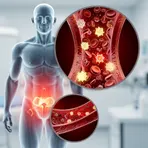
- A high level of C-reactive protein in the blood can indicate the presence of inflammatory conditions.
- C-reactive protein level
- serum C-reactive protein
- high C-reactive protein
Loading YouTube…
Watch on YouTubeSo the other inflammation marker that showed up was CRP, which is C reactive protein.
- So the other inflammation marker that showed up was CRP, which is C reactive protein.
- So now what you would track for is things like homocysteine and high highly sensitive C reactive protein.
- Paul Ritger, brilliant scientist at Harvard, has done all these work where he measures C reactive protein.
Examples
-
The ESR and C-reactive protein levels were normal.
Academic text (2007) -
Doctors often measure C-reactive protein levels to assess inflammation in patients with chronic diseases.
-
Albumin was 31 g/dl and C-reactive protein was 28 IU.
Academic text (2007) -
His serum C-reactive protein level was 1 mg/L, and his leukocyte count was 19.6 x 10^9/L.
Academic text (2013) -
Serum C-reactive protein (CRP) was elevated to 109 mg/L.
Academic text (2015) -
C-reactive protein concentration was measured with a commercially available kit (Behring, Scoppito, L'Aquila, Italy).
Academic text (2001) -
His serum C-reactive protein level rose to 68 mg/L; intravenous vancomycin and meropenem treatment were initiated.
Academic text (2013) -
Therefore, a bacterial infection should always be ruled out (leucocyte count, examination of ascitic fluid, cultures, C-reactive protein) before the diagnosis of HRS is made.
Academic text (2003) -
The erythrocyte sedimentation rate (ESR) and C-reactive protein (CRP), also known as acute phase reactants, can be used to detect inflammation.
Academic text (2014) -
Monitoring C-reactive protein is essential for predicting the risk of heart disease in asymptomatic individuals.
Synonyms
 4
4.4
4
4.4
A blood protein that rises when the body is inflamed
Surface Forms
Morphology
C-reactive + protein
This is a domain-specific medical term whose full meaning (a liver-produced protein that rises in the blood in response to inflammation) is not derivable from the parts. Although 'protein' and the word 'reactive' might suggest a responding molecule, the label 'C-reactive' is technical and its clinical implication would not be predictable to a B1 learner.
Etymology
C-reactive protein comes from an old lab test: scientists found a protein that reacted with a part of the pneumonia germ called 'C'. Today doctors measure C-reactive protein in the blood as a sign of 'inflammation' or infection because its level rises when the body is fighting something.