
Byzantine architecture
- noun
- /bɪˈzæntiːn ˌɑːrkɪˈtɛkʧər/
- Specialized
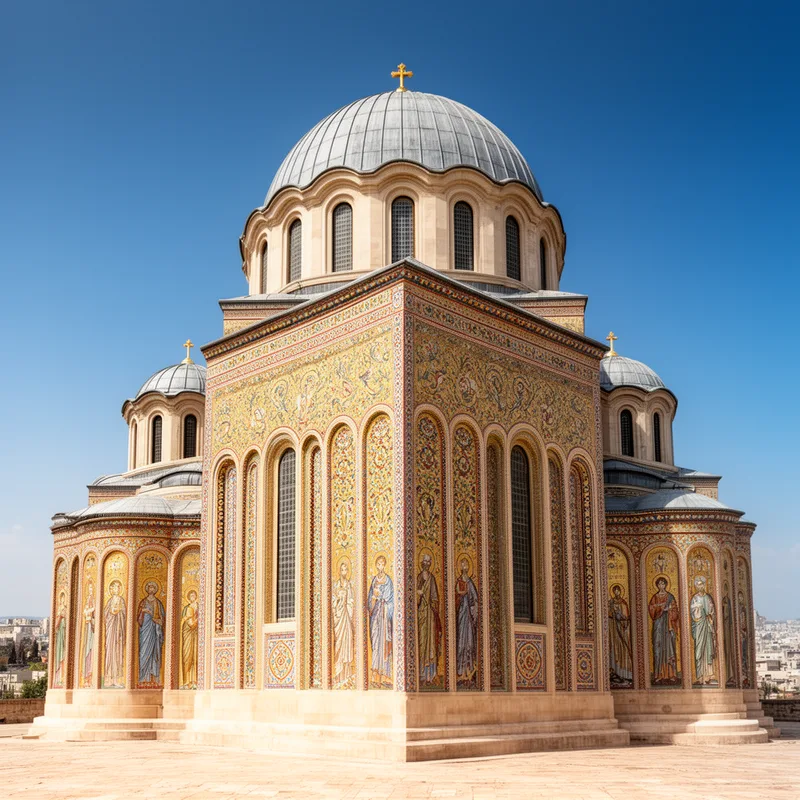
- Visitors admire the intricate mosaics that define Byzantine architecture in ancient churches.
Examples
-
For now, the consensus is that Hagia Sophia is stable and could withstand a major earthquake, says Robert Ousterhout, a University of Illinois Byzantine architecture specialist.
Academic text (2003) -
PHOTO (BLACK & WHITE): Xenophondos Monastery, administered by Greek monks, features Byzantine architecture, enclosed by a wall of locally hewn stones, as are all convents.
Academic text (2003) -
Despite all the later earthquakes and political upheavals, it has survived as a supreme example of Byzantine architecture.
Academic text (2001) -
Byzantine architecture exploits the same circular paradigm insofar as it captures meaning in the confines of the sphere: the arch, the vault, and the dome.
Academic text (2006) -
The stunning domes of the Hagia Sophia are a hallmark of Byzantine architecture.
-
In many cities, churches built in the style of Byzantine architecture showcase magnificent rounded arches.
How Ornate


Surface Forms
Morphology
The meaning is fully compositional: 'Byzantine' specifies origin/style (relating to Byzantium) and 'architecture' denotes building design, so together they denote the style of architecture from the Byzantine tradition. This adjectival + noun combination follows a transparent, cross-linguistic pattern and would be predictable to a B1 learner who knows both constituents.
Etymology
Byzantine architecture gets its name from the Byzantine Empire, centered in the city of Constantinople. Builders there put big round domes on square bases and covered walls with bright gold mosaics, so the phrase now means a 'style of building' with those features.