

Berberis
- noun
- /ˈbɜr.bər.ɪs/
- Specialized
 :
Berberis
:
Berberis
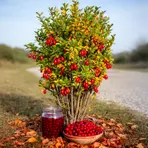
- Berberis species are often planted as ornamental hedges because of their dense thorny branches.
- Berberis (barberry)
Examples
-
Botanists have identified nearly 500 species within the genus Berberis.
-
The Berberis shrub thrives in well-drained soil.
-
The garden includes several varieties of Berberis for their colorful leaves.
-
Many gardeners choose Berberis for its vibrant colors.
-
The garden was full of colorful flowers and resilient Berberis shrubs that provided a great contrast.
-
In the landscape design, various plants including evergreen Berberis are used to create attractive borders.
-
The spiny branches of the Berberis are effective for deterring unwanted animals from entering the garden.
Synonyms

Shrubs with sharp spines and bright berries that people often grow in gardens
Compounds

- Specialized
A small North American bush that loses its leaves in winter with bright red autumn leaves and red berries

- Specialized
A small bush from eastern Asia with sharp thorns and red berries, often used for hedges
- Specialized
A small upright bush with leaves that fall in winter and red berries used in jams
- Specialized
Shrubs with sharp spines and bright berries that people often grow in gardens
Surface Forms
Etymology
Berberis comes from an old Latin name berberis, which itself comes from the Arabic barbārīs meaning 'barberry', the small sour fruit of these bushes. That's why the name is used for these spiny, berry-bearing shrubs.

