
Baptisia lactea
- noun
- Specialized
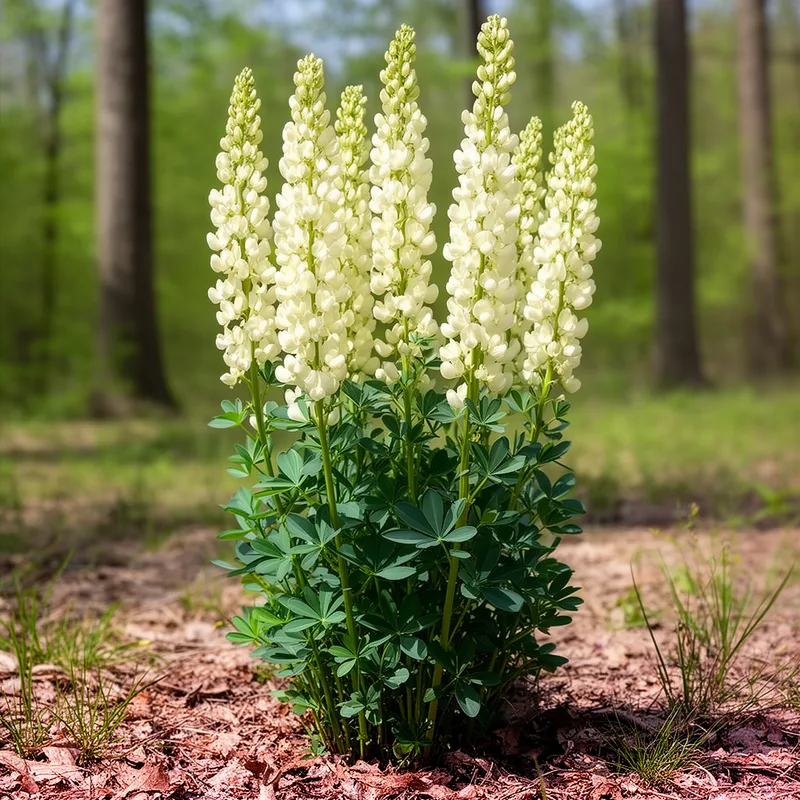
- The creamy racemes of Baptisia lactea bloom from late spring into early summer.
Examples
-
Gardeners prize Baptisia lactea for its attractive white flowers and hardy nature.
-
Many pollinators are attracted to the creamy white flowers of Baptisia lactea in the spring.
-
Baptisia lactea is often found growing in open woodlands throughout the eastern United States.
-
I saw a beautiful Baptisia lactea blooming in the garden.
-
The Baptisia lactea is known for its creamy white flowers.
-
Baptisia lactea is a common sight in the wildflower gardens of the eastern United States.
-
The tall stems of Baptisia lactea can provide a lovely backdrop in any native plant landscape.
Synonyms

A plant with creamy white flowers that grows in meadows and woods

A North American plant with blue, white, or yellow flowers that grows in prairies and open woods
Surface Forms
Morphology
Baptisia + lactea
This binomial name is compositional: 'Baptisia' is the genus (a pea-family plant) and 'lactea' is a Latin adjective meaning 'milky' or 'milk-white', so the name denotes a milky/white-flowered Baptisia. The species epithet directly describes appearance rather than an idiomatic meaning, so if a learner knows both constituents (including the Latin-derived adjective) the overall meaning is derivable.
Etymology
Baptisia lactea gets its name from two old words: Baptisia comes from a Greek word meaning 'to dip', because plants in this group were used to make dye, and lactea is Latin for 'milky', describing its creamy white flowers. So the name helps you remember this wild indigo and its milky-coloured blooms.

