
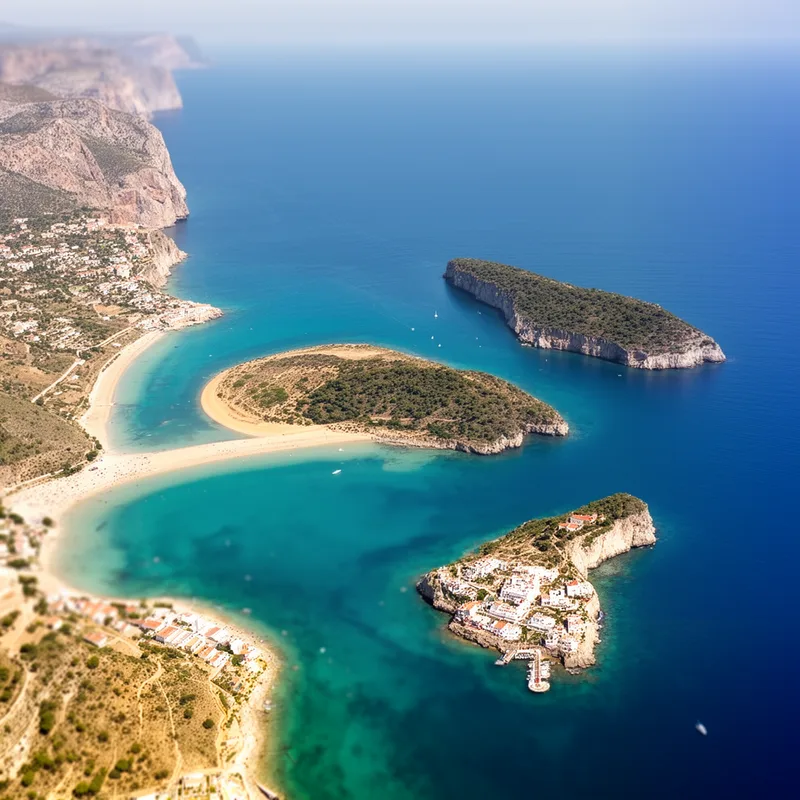
Balearic Islands


 1
4.1
- proper noun
- The seemingly obscure Norwegian raids on the Balearic Islands have a twofold significance.
- attack on the Balearic Islands
- raids on the Balearic Islands
Examples
-
Mallorca is the largest of the Balearic Islands and is known for its beautiful beaches.
-
The Norse fleet continued eastward along the coast of Serkland, that is, the land of the Saracens, to the Balearic Islands.
Academic text (1996) -
Nevertheless, they are the first recorded attacks on the Balearic Islands by a Christian force.
Academic text (1996) -
Two of these in particular shed important light on the attacks against the Balearic Islands.
Academic text (1996) -
Two non-Scandinavian sources record the attack on the Balearic Islands.
Academic text (1996) -
Such fame may have helped stir popular interest in the Balearic Islands as the target of a future crusade.
Academic text (1996) -
Yet subsequent historians of Spain and the Balearic Islands trace their knowledge of the raids almost exclusively to him.
Academic text (1996) -
The supposed expedition of 1108 has appeared in histories of the Balearic Islands even in this century.
Academic text (1996) -
A persistent weakness of earlier treatments is confusion over the correct year of Siguror's assault on the Balearic Islands.
Academic text (1996) -
During the thirteenth and fourteenth centuries, the Balearic Islands achieved enormous prestige and wealth as an emporium and staging post.
Academic text (1996)
Surface Forms
Morphology
The meaning is directly compositional: 'Balearic' indicates origin/association with the Balearic region and 'islands' denotes land surrounded by water, so a learner who knows both words can infer it refers to the islands belonging to the Balearic area. This is a transparent, place-name construction and parallels equivalent forms in other languages, making it readily understandable.
Etymology
Balearic Islands: One popular story says the name comes from the island people who were famous for throwing stones with slings, so Balearic may come from a word meaning 'those who throw'. That's why the group of Islands keeps this name today.