
Babinski reflex


 1
6.8
1
6.8
- noun
- /bəˈbɪn.ski ˈriː.flɛks/
- Specialized
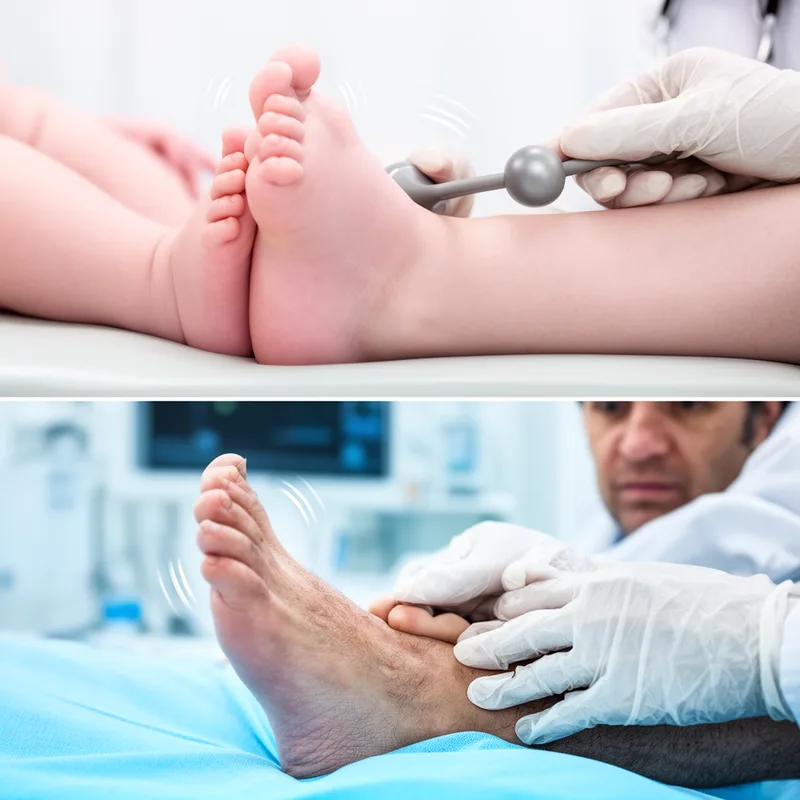
- In adults, a positive Babinski reflex can signal a problem with the central nervous system.
Examples
-
The doctor observed the Babinski reflex during the examination of the infant's neurological health.
-
The doctor checked for the Babinski reflex to assess the patient's neurological function.
-
The presence of the Babinski reflex is normal in babies under two years old.
-
The doctor tested the patient's Babinski reflex to assess neurological function.
-
Children often exhibit the Babinski reflex when they are infants.
-
In infants, the presence of the Babinski reflex is a normal response when the foot's sole is stroked.
-
When testing for the Babinski reflex, the clinician noted that the toes extended upward.
Synonyms

An upward movement of the toes when someone strokes the bottom of the foot

A big toe moving upward when the sole is stroked, normal in babies but showing nerve damage in adults
Surface Forms
Morphology
This is an eponymic medical term: 'reflex' clearly signals an automatic bodily response, so a learner who knows 'reflex' will grasp that this labels a specific involuntary response. However 'Babinski' is a proper name/technical label that does not transparently describe the exact toe-extension response or its diagnostic implications, so the full meaning requires domain knowledge beyond simple composition.
Etymology
Babinski reflex comes from a simple test: when a doctor gently strokes the sole of the foot, the toes fan or lift up as a natural reflex. That's why a clear Babinski reflex is 'normal in babies' but in older people it can show 'a problem in the nervous system'.