
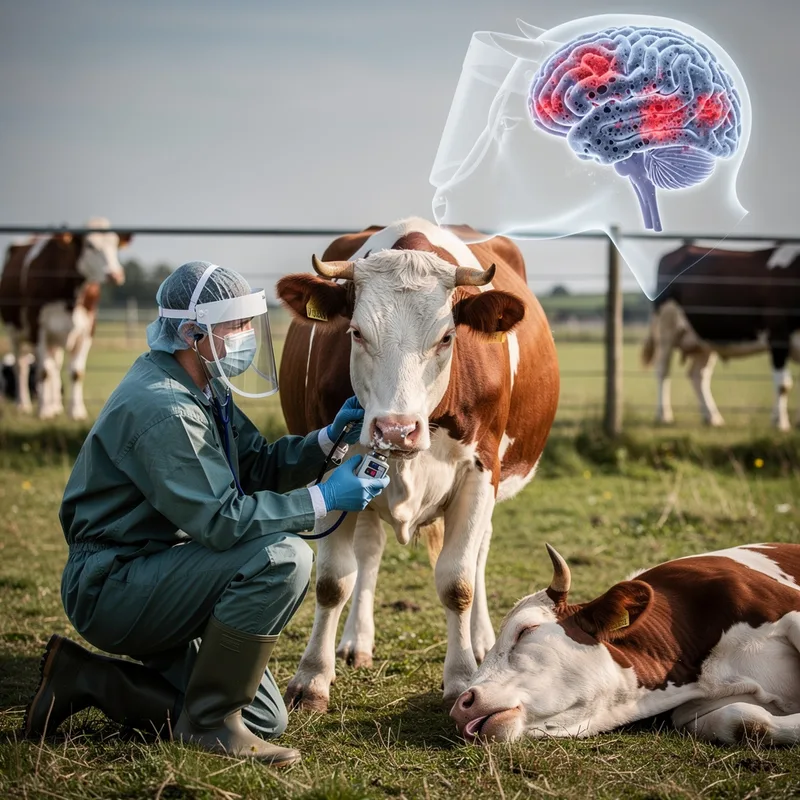
BSE
 5
7.2
5
7.2

- noun
- /biː ɛs iː/
- Specialized
- The link between BSE in cattle and certain human illnesses has raised alarm among health officials.
- BSE prions
- bovine spongiform encephalopathy
- BSE in cattle
Examples
-
The disease known as BSE is a serious concern for cattle health and safety.
-
Countries around the world have implemented strict measures to control BSE outbreaks and protect public health.
-
As of this date, only one imported BSE case has been found in the United States.
Academic text (2004) -
Other countries that have experienced BSE outbreaks have faced even more severe consequences.
Academic text (2013) -
Using prohibited animal materials in cattle feed has been outlawed to prevent BSE transmission.
Academic text (2004) -
Meat from BSE-infected cows has not been shown to be infectious or associated with transmission.
Academic text (2004) -
The disease can infect people if they eat beef from BSE-infected cattle.
Academic text (2013) -
But even basic facts about some animal diseases, such as bovine spongiform encephalopathy (BSE), are still unknown.
Academic text (1994)
Synonyms
 18
3.8
18
3.8
A deadly disease of cows that damages the brain and can make people sick if they eat the meat
A deadly brain disease in cows that makes them unsteady and restless
Surface Forms
Morphology
BSE = bovine + spongiform + encephalopathy (opaque) = B + S + E
The initialism 'BSE' does not transparently reveal the meaning of the full technical phrase to an average learner.
Etymology
BSE stands for bovine spongiform encephalopathy, where bovine means 'cow', spongiform means 'sponge-like', and encephalopathy means 'brain disease'. So BSE, often called 'mad cow disease', is a deadly illness that makes a cow's brain look like a sponge.