

Atropa belladonna
- noun
- /əˈtroʊpə ˌbɛləˈdɒnə/
- Specialized
- Atropa belladonna.
Examples
-
Atropa belladonna.
-
You mean... Atropa belladonna.
-
Gardeners are warned never to handle Atropa belladonna without gloves due to its toxicity.
-
Some medicinal drugs derive their active ingredient from Atropa belladonna.
-
The berries of Atropa belladonna are highly poisonous to humans and many animals.
Synonyms
 4
9.9
4
9.9

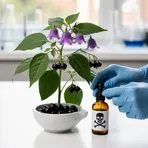
A poisonous plant called deadly nightshade with black berries used to make medicine


 1
9.9
1
9.9
A poisonous plant with bell-shaped flowers and shiny black berries used to make atropine
 1
9.7
1
9.7
A poisonous plant with bell-shaped flowers and shiny black or red berries
Surface Forms
Morphology
This is a literal scientific binomial: 'Atropa' (a genus of poisonous plants) + 'belladonna' (a toxic/medicinal plant), so the combined name directly denotes that poisonous herb. There is no idiomatic or metaphorical shift—botanical naming is compositional—so a learner who knows the constituents can infer the meaning.
Etymology
Atropa belladonna gets its name from two clear images: Atropa refers to Atropos, the fate who ends life, so it hints at danger, and belladonna (Italian for 'beautiful lady') recalls women using tiny drops from the plant to make their eyes look larger. Those drops and the shiny berries are very dangerous, so the name links beauty and harm, and that's why the plant is known as 'poisonous' and a source of the drug atropine.