

belladonna plant


 1
9.9
1
9.9
- noun
- /ˌbɛləˈdɑnə plænt/
- Specialized
- Botanists often study the belladonna plant for its unique chemical properties.
Examples
-
The belladonna plant is known for its toxic properties.
-
The berries of the belladonna plant are highly toxic and should never be eaten.
-
Atropine, a valuable medicinal compound, is extracted from the belladonna plant.
-
Many people are unaware that the belladonna plant is dangerous.
-
The belladonna plant is known for its toxic berries, which can be deadly if ingested.
-
In traditional medicine, the belladonna plant was used to treat various ailments despite its danger.
-
Gardeners should be cautious when handling the belladonna plant due to its poisonous properties.
Synonyms
 4
9.9
4
9.9
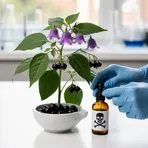
A poisonous plant called deadly nightshade with black berries used to make medicine
 1
9.7
1
9.7
A poisonous plant with bell-shaped flowers and shiny black or red berries

A poisonous plant with bell-shaped flowers and shiny black berries used to make the medicine atropine
Surface Forms
Morphology
The phrase is a straightforward compositional noun phrase: 'belladonna' names a specific toxic herb and 'plant' classifies it as a botanical organism, so the combined meaning is directly derivable from the parts. There is no idiomatic or metaphorical shift here—species name + 'plant' is cross-linguistically common—so a B1 learner who knows both constituents will understand it.
Etymology
Belladonna plant gets its name from the Italian words bella and donna, which mean 'beautiful woman', because in the past some women used eye drops made from it to make their eyes look bigger and more attractive. Because the plant is very poisonous, the name reminds us that it is beautiful but dangerous, so today we think of it as a toxic plant.