
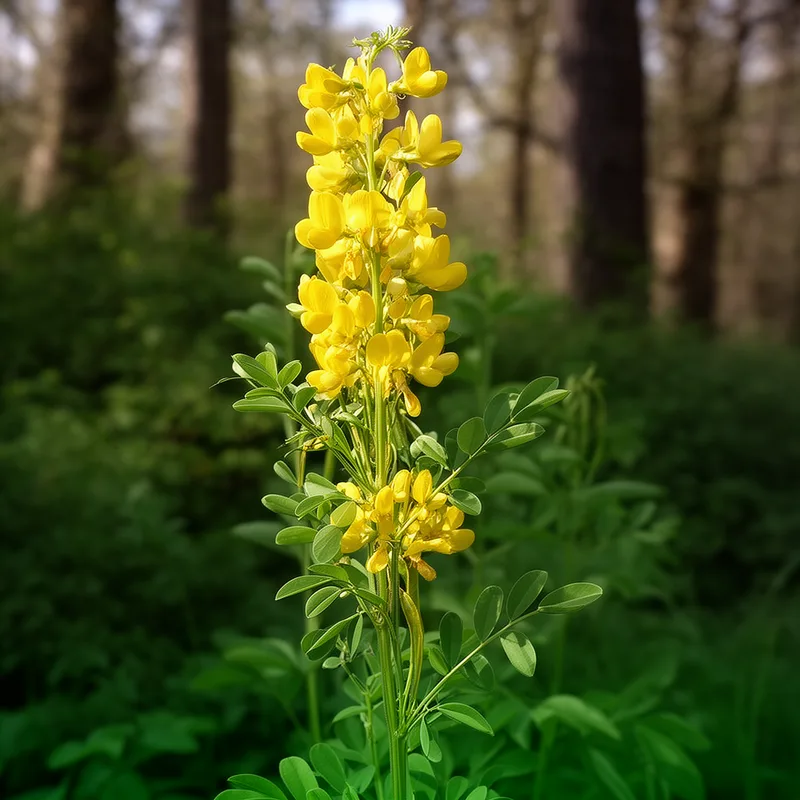
Astragalus glycyphyllos
- noun
- Specialized
- Astragalus glycyphyllos is a perennial plant with compound leaves and yellowish flowers that grows in European hedgerows.
Examples
-
The distinctive yellowish flowers of Astragalus glycyphyllos appear in late spring.
-
Astragalus glycyphyllos is commonly found in hedgerows and woodland edges across Europe.
-
Herbalists have traditionally used Astragalus glycyphyllos for its reputed medicinal properties.
-
I found Astragalus glycyphyllos growing near the riverbank.
-
Have you ever seen Astragalus glycyphyllos in the wild?
-
In herbal medicine, Astragalus glycyphyllos is often used for its potential health benefits.
-
During a nature walk, I spotted the yellowish flowers of Astragalus glycyphyllos blooming in a sunny glade.
Synonyms

A plant with sweet roots that flavor food and help with coughs
Surface Forms
Morphology
Astragalus + glycyphyllos
This is a Latin binomial (scientific name) rather than a compositional English phrase; while 'Astragalus' names the genus, 'glycyphyllos' is not an English lexical item (dictionary entry missing) and its Greek-derived parts would not be obvious to a B1 learner. The overall meaning ('a species of wild liquorice') cannot be derived from the surface constituents by a typical learner, so the expression is not transparently interpretable.
Etymology
Astragalus glycyphyllos comes from old Greek words: Astragalus refers to an 'ankle bone' because the plant's small seed pods look like little bones, and glycyphyllos means 'sweet leaf' because its leaves can taste a bit like liquorice, which is why people call it 'wild liquorice'.

