
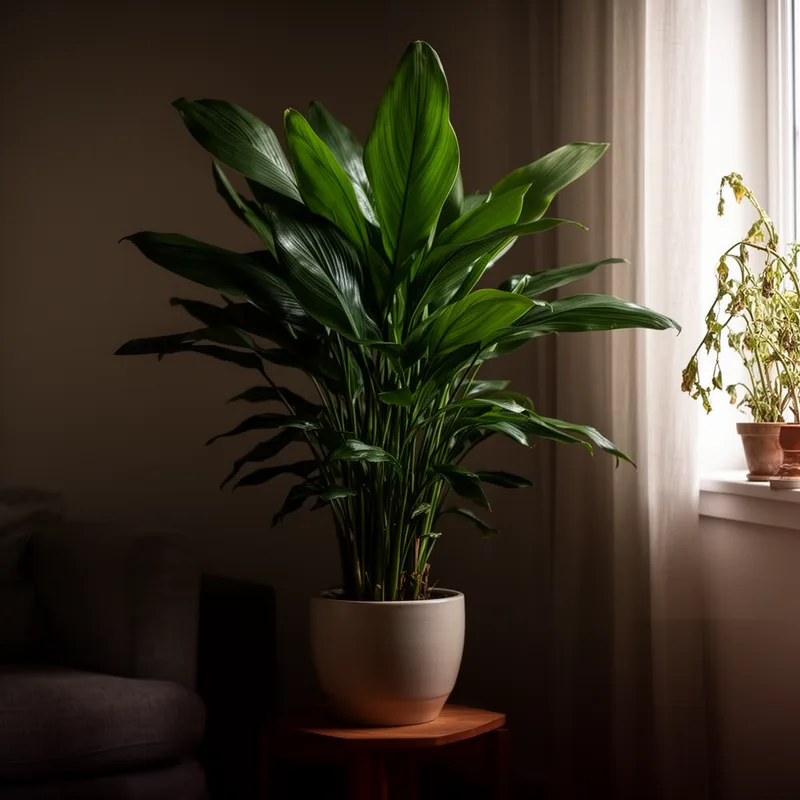
Aspidistra elatior
- noun
- /ˌæspɪˈdɪstrə ɪˈleɪʃər/
- Specialized
- The Aspidistra elatior thrives in low light and is perfect for interiors.
Examples
-
She decorated her office with a large Aspidistra elatior near the window.
-
I bought an Aspidistra elatior for my living room.
-
Many gardeners recommend Aspidistra elatior for people new to houseplants.
-
The Aspidistra elatior is known for its resilience.
-
Many gardeners recommend Aspidistra elatior for people new to houseplants.
-
She decorated her office with a large Aspidistra elatior near the window.
-
The Aspidistra elatior thrives in low light and is perfect for interiors.
Synonyms


 1
9.9
1
9.9
A common houseplant with large shiny leaves that stays green all year

A plant with large green leaves that people keep indoors for decoration

A very hardy houseplant that has long green leaves and needs little care
Surface Forms
Morphology
Aspidistra + elatior
This is a taxonomic Latin binomial (a genus name plus a species epithet) rather than a compositional English phrase; the species epithet 'elatior' is not a familiar English word (and is missing from the provided dictionary entry). Average B1 learners knowing 'Aspidistra' as a plant name still would not reliably derive the specific meaning from the parts because botanical Latin and proper names do not follow ordinary English compositional patterns.
Etymology
Aspidistra elatior comes from old Greek and Latin words. Aspidistra links to a Greek word for 'shield' because its wide, shiny leaves look like shields, and elatior means 'taller', so the name gives you a picture of a strong, taller houseplant that is also called the 'cast-iron plant' because it is 'hard to kill'.