
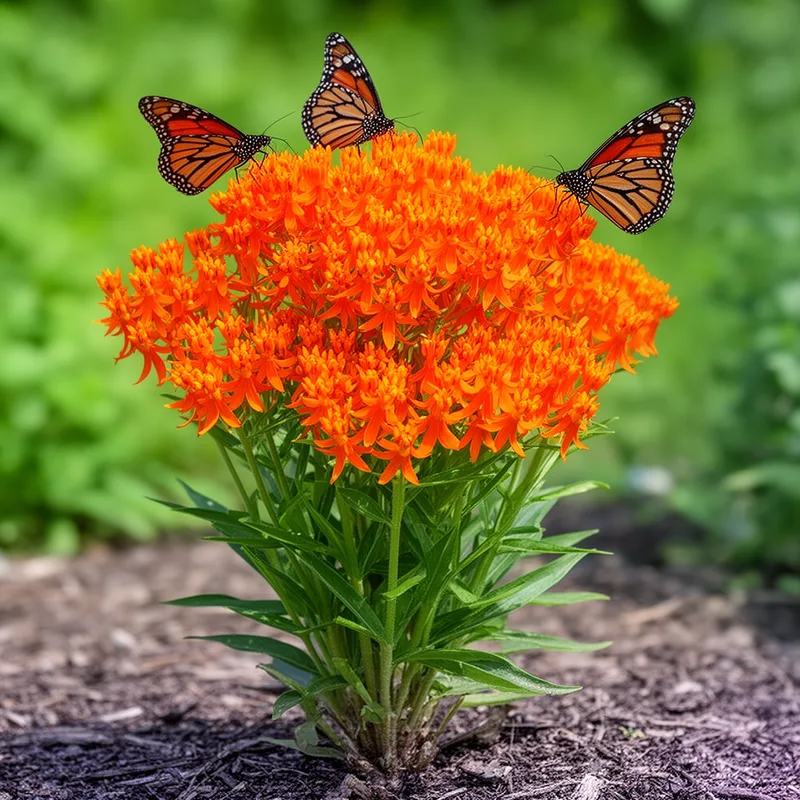
Asclepias tuberosa
- noun
- /ˌæskəˈliːpɪəs ˌtjuːbəˈroʊzə/
- Specialized
- The Asclepias tuberosa blooms beautifully in the summer.
- Asclepias tuberosa (butterfly weed)
- Asclepias tuberosa (weed)
Examples
-
The garden was filled with Asclepias tuberosa, attracting dozens of Monarch butterflies.
-
Botanists recommend planting Asclepias tuberosa to support local pollinators.
-
She identified the vibrant orange flowers as Asclepias tuberosa during their nature walk.
-
Have you seen the Asclepias tuberosa in the garden?
-
Gardeners often choose the Asclepias tuberosa for its bright orange flowers, which attract many butterflies.
-
The Asclepias tuberosa is a popular plant in butterfly gardens due to its vibrant blooms and ability to host caterpillars.
-
This summer, I planted Asclepias tuberosa, and I've already noticed an increase in butterflies around my yard.
Synonyms

A plant with bright orange flowers that attract butterflies

A North American plant with bright orange flowers used as a medicine
A tall plant that lives for many years and has bright orange flowers that attract butterflies

A plant from the eastern and southern United States that has bright orange flowers and lives for several years

A plant that lives for many years with bright orange flowers in the eastern and southern United States
Surface Forms
Morphology
Asclepias + tuberosa
The form is a Linnaean binomial (genus + species) so the meaning is compositionally a specific Asclepias plant; if a learner knew 'Asclepias' as the milkweed genus and understood the Latin epithet 'tuberosa' (tuberous), they could infer it denotes that particular tuberous Asclepias. However, the name is technical/Latin and the species epithet is not a common English word, making it unlikely to be immediately clear to an average B1 learner without botanical or Latin knowledge.
Etymology
Asclepias tuberosa is named with two parts: Asclepias honors Asclepius, the Greek god of healing because people once used the plant as medicine, and tuberosa means it has a thick, tuber-like root. Its bright orange flowers attract many butterflies, which is why people call it 'butterfly weed'.

