

Asclepias meadii
- noun
- Specialized
- The prairies are home to the rare Asclepias meadii, which plays a crucial role in supporting pollinators.
Examples
-
Loss of native grasslands has led to a significant decline in Asclepias meadii populations.
-
Conservationists are working hard to restore habitats where Asclepias meadii once thrived.
-
The rare Asclepias meadii is crucial for local ecosystems.
-
Have you seen the Asclepias meadii blooming in the park?
-
Conservationists are working hard to restore habitats where Asclepias meadii once thrived.
-
Loss of native grasslands has led to a significant decline in Asclepias meadii populations.
-
The prairies are home to the rare Asclepias meadii, which plays a crucial role in supporting pollinators.
Synonyms

 1
9.9
1
9.9

A rare flowering plant that lives many years in central North America and is now threatened
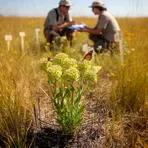
A threatened milkweed that grows naturally in central North American grasslands
Surface Forms
Morphology
Asclepias + meadii
This is a Linnaean binomial (genus + species): knowing 'Asclepias' as a milkweed genus would allow a learner to infer the phrase names a particular species of that genus, so part of the meaning is compositional. However, 'meadii' is a Latinized epithet with no lexical meaning in English and does not convey descriptive content to a B1 learner, so the full meaning is not fully derivable from the constituents.
Etymology
Asclepias meadii is named in two parts: the first part, Asclepias, refers to Asclepius, a Greek god linked to 'healing' because people once used milkweed in folk medicine, and the second part, meadii, honors a person named Mead who helped collect or study the plant, so the full name points to this particular milkweed from central North America.