
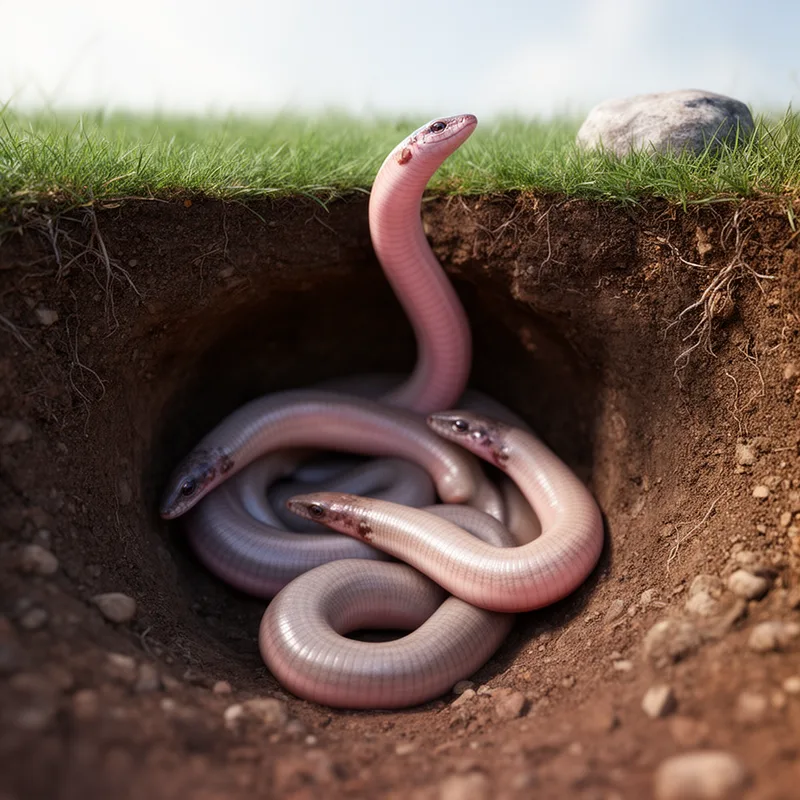
Amphisbaenia
- noun
- /æmˌfɪsˈbeɪniə/
- Specialized
- Scientists discovered a new species within the genus Amphisbaenia in South America.
Examples
-
Because of their burrowing lifestyle, members of Amphisbaenia are seldom seen above ground.
-
The fossil record of Amphisbaenia provides insight into their ancient origins.
-
The Amphisbaenia is often found in sandy soils.
-
Did you know that Amphisbaenia can burrow very quickly?
-
Members of the genus Amphisbaenia are typically elongated and have a smooth, scaleless body.
-
Researchers are studying the behavior of Amphisbaenia to understand how they adapt to burrowing.
-
The unique morphology of Amphisbaenia allows them to navigate through soil with ease.
Synonyms

A lizard with no legs and a long body that digs and lives underground

A group of legless reptiles that live underground and look like worms

A group of legless lizards that live underground
Compounds
- Specialized
A group of legless reptiles that live underground and look like worms
Surface Forms
Etymology
The word Amphisbaenia comes from the Greek parts amphis ('both') and bainein ('to go') and reminds us of an old myth about a snake with a head at each end. That's why the name fits these legless, burrowing lizards: they can seem 'two-headed' and move forward or backward in tight tunnels.

