

American sweet gum
- noun
- /əˈmɛrɪkən swit ɡʌm/
- US
- The American sweet gum is known for its striking star-shaped leaves that turn vibrant colors in autumn.
Examples
-
Sticky sap from the American sweet gum was once used as a chewing gum substitute by Native Americans.
-
Landscapers often plant American sweet gum trees in parks for their ornamental value and shade.
-
The American sweet gum tree is known for its star-shaped leaves.
-
Many American sweet gums grow in parks across the country.
-
Landscapers often plant American sweet gum trees in parks for their ornamental value and shade.
-
The American sweet gum is known for its striking star-shaped leaves that turn vibrant colors in autumn.
-
Sticky sap from the American sweet gum was once used as a chewing gum substitute by Native Americans.
Synonyms


 1
6.0
1
6.0
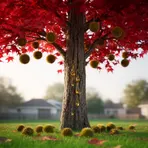
A North American tree with spiky round seed balls and sweet-smelling sap and red leaves in autumn
 1
6.1
1
6.1
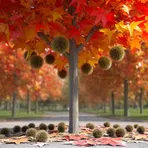
A North American tree with star-shaped leaves and prickly round fruits

A North American tree with star-shaped leaves and spiky round fruit
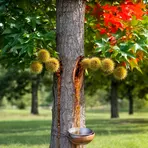
A tall North American tree with star-shaped leaves, prickly round fruit, and fragrant sap
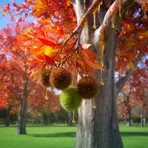
A North American tree with spiky round fruits and scented sap
Surface Forms
Morphology
The phrase is compositional: 'gum' denotes a resin-producing tree, 'sweet' describes a pleasant/aromatic quality of its sap or scent, and 'American' specifies its origin. A B1 learner who knows these constituents can reasonably infer it refers to a North American tree with sweet-smelling resin, so the meaning is directly derivable from the parts.
Etymology
American sweet gum gets its name from its sticky, sweet sap that people chewed like gum. Because Native Americans and early settlers used it as a 'chewing gum', the name came to mean this tree with star-shaped leaves and spiky fruit.