
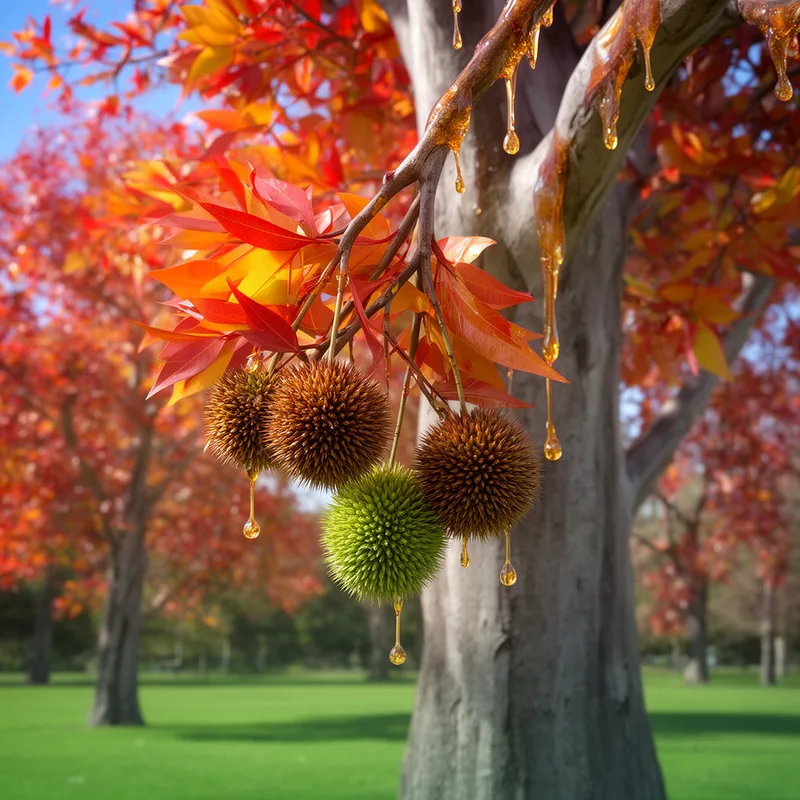
red gum
- noun
- /rɛd ɡʌm/
- US
- The distinctive leaves of the red gum turn vibrant shades in autumn.
Examples
-
He collected fragrant sap from the red gum for use in homemade incense.
-
The park is home to several tall red gum trees.
-
The red gum tree is known for its unique fruit.
-
Many birds nest in the branches of the red gum.
-
The park is home to several tall red gum trees that attract many visitors.
-
He collected fragrant sap from the red gum to use in his homemade incense.
-
The distinctive leaves of the red gum turn vibrant shades of red and orange in autumn.
Synonyms


 1
6.0
1
6.0
A North American tree with spiky round seed balls and sweet-smelling sap and red leaves in autumn
 1
6.1
1
6.1
A North American tree with star-shaped leaves and prickly round fruits

A North American tree with star-shaped leaves and spiky round fruit
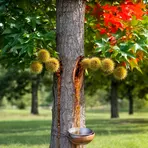
A tall North American tree with star-shaped leaves, prickly round fruit, and fragrant sap

A North American tree with star-shaped leaves, spiky round fruit, and sticky fragrant sap
Surface Forms
Morphology
The noun phrase is a straightforward color + noun composition: 'red' (a color) qualifying 'gum' (a gum tree or its wood), so the sense 'red-colored wood from a gum tree' is directly derivable from the parts. Any minor ambiguity with 'gum' meaning chewing gum is resolved by context (e.g., 'table is made of'), and this kind of adjective + noun naming is cross-linguistically common and thus readily comprehensible to B1 learners who know both constituents.
Etymology
Red gum may come from the sticky, fragrant 'sap' the sweetgum tree gives and the red colour its leaves and wood show in autumn, so red and gum together describe the tree's look and its sap.