
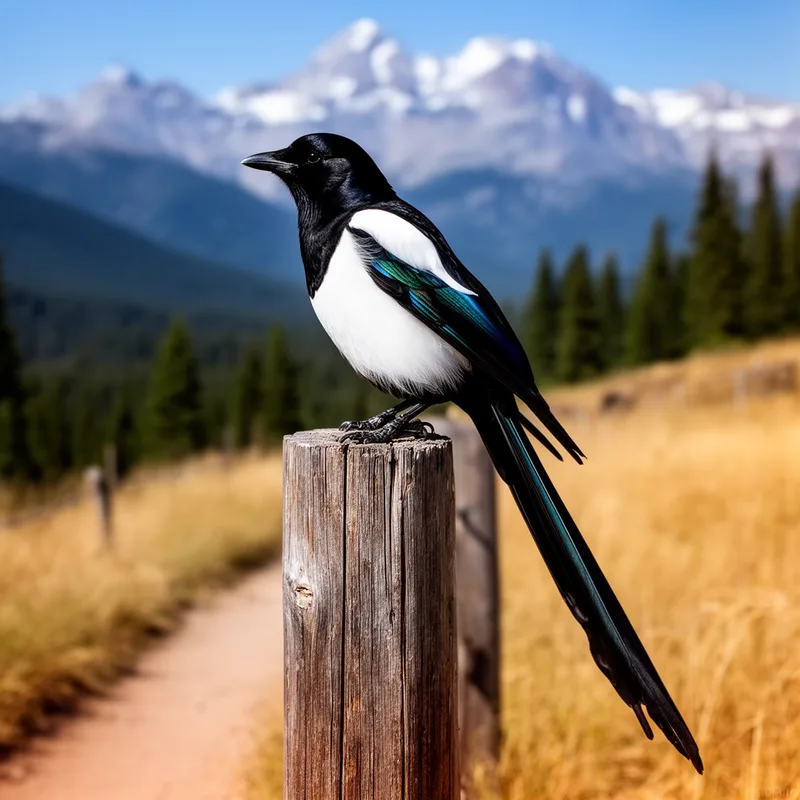
American magpie
- noun
- /əˈmɛrɪkən ˈmaɪɡpaɪ/
- US
- Unlike other magpies, the American magpie is primarily found west of the Great Plains.
Examples
-
We spotted an American magpie perched on a fence near the hiking trail.
-
The black-and-white feathers of the American magpie glistened in the morning sun.
-
The American magpie is known for its striking appearance.
-
Have you ever seen an American magpie in the wild?
-
While hiking in the Rockies, we spotted an American magpie perched on a tree branch, its striking black and white plumage gleaming in the sun.
-
The American magpie is known for its long tail and intelligent behavior, often seen foraging for food in the grass.
-
During our trip, we admired the American magpie, which was easily recognizable by its distinctive coloring and bold nature.
Synonyms
 3
3.5
3
3.5

A large black-and-white bird with a long tail that likes shiny things
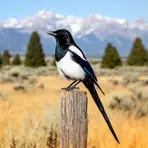
A magpie with black and white feathers and a long tail that lives in western North America
Surface Forms
Morphology
The phrase is a straightforward composition of 'American' (from the Americas) + 'magpie' (the bird), so it denotes a magpie species associated with America; a B1 learner who knows both words will readily infer this. The nationality/adjective + noun pattern for species or types is cross-linguistically common and follows regular noun modification, making the meaning fully predictable from the parts.
Etymology
American magpie is a simple name: people put American before magpie to show this black-and-white, long-tailed bird lives in North America, often in the Rocky Mountains. So, the name means 'the magpie found in America'.