

American feverfew
- noun
- /əˈmɛrɪkən ˈfiːvərˌfjuː/
- US
- The American feverfew is valued in herbal medicine for its traditional use in treating burns.
Examples
-
Many native remedies incorporated the leaves of American feverfew for their soothing properties.
-
The leaves of American feverfew have been used by the Catawba Indians to treat burns.
-
Botanists studied the habitat preferences of American feverfew in southern Appalachia.
-
The American feverfew is known for its medicinal properties.
-
Many herbalists use American feverfew to treat various ailments.
-
Traditional healers often recommend American feverfew as a remedy for skin irritations.
-
In eastern North America, American feverfew is recognized for its medicinal value.
Synonyms
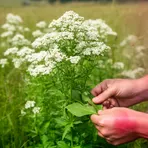
A strong plant with white flowers that lives for many years and has leaves used to treat burns

A strong herb with white flowers whose leaves people use to treat skin problems
Surface Forms
Morphology
The noun phrase simply combines a national modifier 'American' (indicating origin or variety) with the noun 'feverfew' (a medicinal herb), so the overall meaning — a feverfew species/variety from America — is directly derivable from the parts. This type of adjective + noun composition is cross-linguistically common and would be clear to a B1 learner who knows both constituents.
Etymology
American feverfew got its name from old home remedies: people believed the herb could make a 'fever' fewer, so they called it fever + few to mean fewer fevers. The word 'American' shows the plant comes from North America, and today the name refers to a North American herb used in simple folk medicine.

