

American bugbane
- noun
- /əˈmɛrɪkən ˈbʌɡbeɪn/
- Specialized
- You can identify American bugbane by its large leaves and clusters of white blooms in the spring.
Examples
-
Many gardeners grow American bugbane for its tall, showy racemes of white flowers.
-
The roots of American bugbane have long been used in traditional remedies.
-
The American bugbane blooms in late summer.
-
Many gardeners love the American bugbane for its beauty.
-
Many gardeners grow American bugbane for its tall, showy clusters of white flowers.
-
You can identify American bugbane by its large leaves and clusters of white blooms in the spring.
-
The roots of American bugbane have been historically valued in herbal medicine.
Synonyms
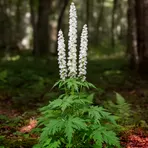
A tall plant from the woods of eastern North America with spikes of white flowers

A tall flowering plant with white flower clusters that blooms in summer in eastern United States woods
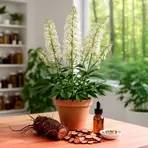
A North American plant used in herbal medicine, also called black cohosh
Surface Forms
Morphology
This is a simple adjectival modification: 'American' specifies origin and 'bugbane' names the plant, so a learner who knows both words can infer it is a bugbane species from America. There is no idiomatic or metaphorical meaning here and the compositional pattern is cross-linguistically common, making the phrase readily interpretable.
Etymology
American bugbane may come from an old belief that the plant kept insects away. The words bug (meaning 'insect') and bane (something that harms) create the image of a plant whose smell or smoke would drive off bugs, so that name was used for this North American plant.

