
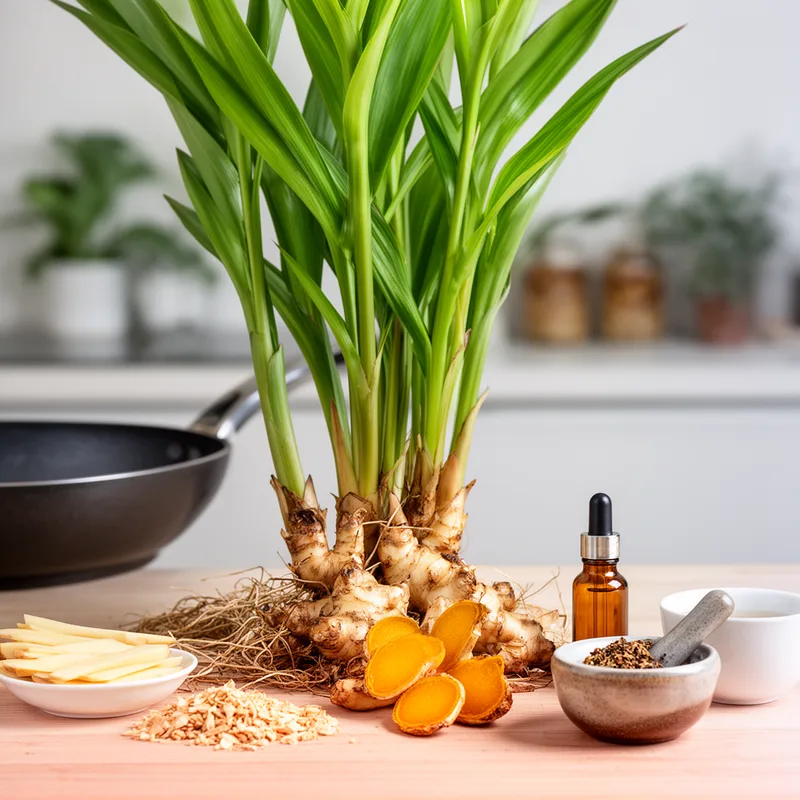
Alpinia officinarum
- noun
- Specialized
- The dried rhizome of Alpinia officinarum is widely used in traditional Chinese medicine.
Examples
-
The roots of Alpinia officinarum are often used in traditional medicine.
-
Researchers are studying the potential health benefits of extracts from Alpinia officinarum.
-
Many chefs use Alpinia officinarum to add a unique flavor to Asian dishes.
-
I added Alpinia officinarum to my herbal tea for flavor.
-
Many chefs use Alpinia officinarum to add a unique flavor to Asian dishes.
-
The dried rhizome of Alpinia officinarum is widely used in traditional Chinese medicine.
-
Researchers are studying the potential health benefits of extracts from Alpinia officinarum.
Synonyms


 1
9.9
1
9.9
A spicy root like ginger used in Asian cooking and medicine

A plant from Asia with spicy roots used for cooking and medicine

A perennial plant from China with white flower clusters and spicy smelling roots used in medicine and cooking
Surface Forms
Morphology
Alpinia + officinarum
This is a Latin binomial (a scientific species name) rather than a compositional English phrase; even if a learner knows 'Alpinia' as a genus of aromatic herbs, the second element 'officinarum' is undefined here and does not transparently yield 'lesser galangal' or its medicinal/spice sense. Scientific names function as proper nouns and are not semantically predictable from their parts for an average B1 learner, so the meaning would be unfamiliar without prior exposure.
Etymology
Alpinia officinarum comes from Prospero Alpini, an Italian plant scientist, which gives the Alpinia part, and from the Latin word 'officina', a 'workshop' or storeroom where medicines were kept, which gives the officinarum part. So the name links the person who studied the plant and the plant's long use as a spice and being 'used in medicine'.