

Alpinia officinalis
- noun
- Specialized
- The roots of Alpinia officinalis are used in traditional Chinese medicine.
Examples
-
The chef added a small amount of Alpinia officinalis to enhance the flavor of the dish.
-
Botanists studied the blooming patterns of Alpinia officinalis in its native habitat.
-
The roots of Alpinia officinalis are often used in traditional Chinese medicine.
-
Have you ever tried Alpinia officinalis as a flavoring agent?
-
The roots of Alpinia officinalis are frequently used to treat digestive issues in herbal medicine.
-
In cooking, Alpinia officinalis is valued for its strong aroma and flavor, often enhancing Southeast Asian dishes.
-
Traditional herbalists recommend Alpinia officinalis for its medicinal properties and culinary uses.
Synonyms

A plant from Asia with spicy roots used for cooking and medicine
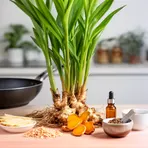
A ginger plant with strong-smelling roots used as a spice and in medicine
Surface Forms
Morphology
This is a compositional Latin binomial: 'Alpinia' names a plant genus and 'officinalis' specifically marks plants with medicinal uses. A learner who knows both constituents can reasonably infer this refers to a medicinal species of Alpinia, and the scientific naming pattern is cross-linguistically regular, so the meaning is directly derivable.
Etymology
Alpinia officinalis may come from an Italian plant doctor named Prospero Alpini, whose name became Alpinia. The Latin word officinalis means 'used in medicine', so the full name tells you this plant was known for medicine and for flavor.

