

Allium triquetrum
- noun
- Specialized
- The Allium triquetrum is easily identified by its triangular leaves and white, bell-shaped flowers.
Examples
-
You can use young leaves of Allium triquetrum as a mild, onion-like addition to salads.
-
Gardeners often remove Allium triquetrum because it can spread rapidly in mild climates.
-
The Allium triquetrum is easily identified by its triangular stems and white flowers.
-
The Allium triquetrum blooms beautifully in the spring.
-
Many gardeners appreciate the Allium triquetrum for its unique shape.
-
Gardeners often remove Allium triquetrum because it can spread rapidly in mild climates.
-
You can use young leaves of Allium triquetrum as a mild, onion-like addition to salads.
Synonyms

A wild plant from Europe with three-sided leaves that can spread quickly
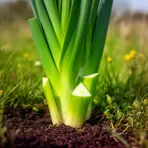
A European leek with triangular leaves that grows wild in Britain
Surface Forms
Morphology
This is a Latin binomial composed of a known genus name 'Allium' (a group including garlic/onion) plus an adjective 'triquetrum' meaning 'three-cornered/triangular', so a learner who knows both constituents can infer it denotes a type of Allium with a triangular feature (e.g. triangular leaves). Scientific names follow this compositional pattern across languages, making the referent predictable rather than idiomatic for learners who understand the parts.
Etymology
Allium triquetrum may come from the Latin parts Allium ('onion') and triquetrum ('three-cornered'), giving the image of a small onion plant with triangular stems and white bell flowers. That's why the name fits this wild leek that smells and tastes a little like an onion and has three-sided stems.

