

Allegheny vine
- noun
- US
 :
enredadera de Allegheny
:
enredadera de Allegheny
- The white or pinkish flowers of the Allegheny vine bloom in early summer.
Examples
-
The Allegheny vine is often found growing along woodland edges in the eastern United States.
-
Gardeners appreciate the delicate foliage of the Allegheny vine in shaded areas.
-
The Allegheny vine grows abundantly in the forest.
-
Have you seen the Allegheny vine blooming in spring?
-
Gardeners appreciate the delicate foliage of the Allegheny vine in shaded areas.
-
The Allegheny vine is often found growing along woodland edges in the eastern United States.
-
The white or pinkish flowers of the Allegheny vine bloom in early summer.
Synonyms
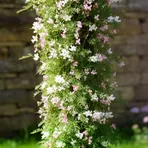
A climbing plant with feathery leaves and small white or pink flowers

A vine with feathery leaves and small white or pink flowers

A climbing plant with fine feathery leaves and clusters of white or pink tube-shaped flowers
Surface Forms
Morphology
Allegheny + vine
This is a straightforward noun phrase combining a place-name (Allegheny) with the common noun 'vine', so its meaning ('a vine associated with or from Allegheny') is directly inferable from the constituents. Place-name + noun compounds are a common, compositional pattern across languages, so a B1 learner who knows both parts would readily understand it.
Etymology
Allegheny vine comes from the 'Allegheny' hills where people first noticed the plant, and the word vine means 'climbing plant'. Think of a delicate, feathery plant climbing over trees and rocks with small white or pink flowers, and you can see why the name describes this particular climbing plant.

