
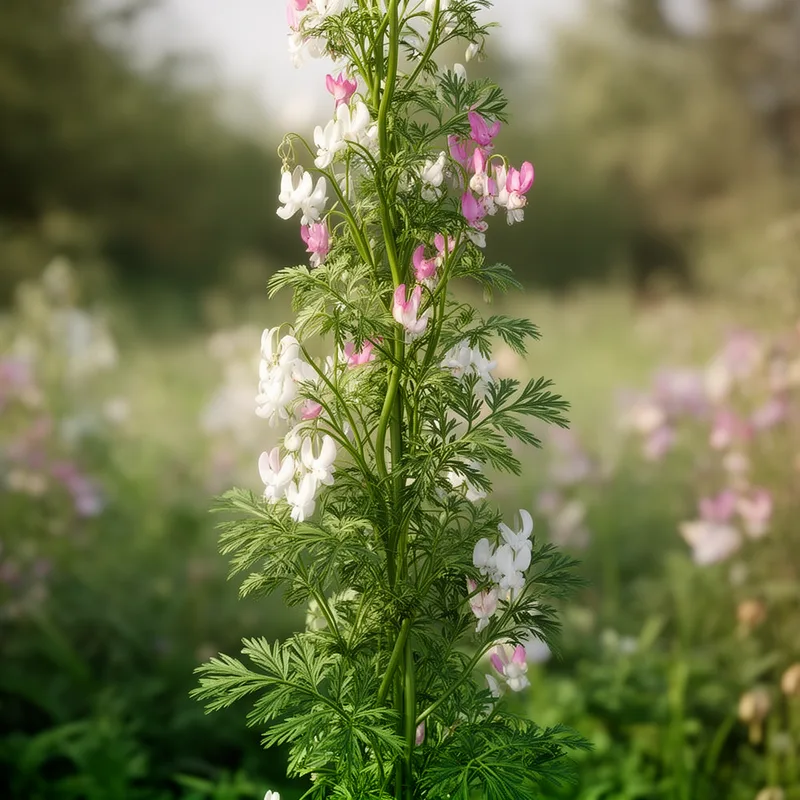
Fumaria fungosa
- noun
- Specialized
- Botanists debated whether Fumaria fungosa should be placed in its own genus or not.
Examples
-
The delicate flowers of Fumaria fungosa add a gentle color to woodland gardens.
-
In spring, the Fumaria fungosa displays its lovely pinkish flowers, attracting many bees.
-
A cluster of Fumaria fungosa was discovered growing alongside other wildflowers in the meadow.
-
The Fumaria fungosa blooms beautifully in spring.
-
Have you seen a Fumaria fungosa in the garden?
-
The garden is filled with various plants, including the charming Fumaria fungosa with its feathery leaves.
-
During our hike, we spotted a vibrant cluster of Fumaria fungosa blooming near the path.
Synonyms
A climbing plant with feathery leaves and small white or pink flowers
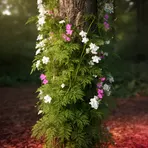
A climbing plant with feathery leaves and white or pink flowers

A climbing plant with fine feathery leaves and clusters of white or pink tube-shaped flowers
Surface Forms
Morphology
Fumaria + fungosa
This is a Latin binomial (genus + specific epithet) and functions as a taxonomic proper name; the specific element 'fungosa' is not a known English word (and is marked '[Word not found in dictionary]'), so the descriptive meaning (‘a vine with feathery leaves and white or pinkish flowers’) cannot be derived by a B1 learner from the constituents. Botanical Latin names are language-neutral labels rather than compositional English phrases, making the expression unpredictable to learners who only know the listed parts.
Etymology
Fumaria fungosa probably comes from Latin words that describe how the plant looks. The first part, Fumaria, may come from 'smoke' because its thin grey-green leaves look soft and misty, and the second part, fungosa, may mean 'fungus-like' or 'spongy' because its small pale flowers grow close together. So the name helps you picture a delicate, feathery vine with white or pinkish flowers.

