

Albizzia julibrissin
- noun
- /ælˈbɪziə dʒuːlɪˈbrɪsɪn/
- Specialized
- The Albizzia julibrissin in our garden attracts many bees and butterflies with its pink flowers.
Examples
-
Due to its delicate foliage, Albizzia julibrissin is often planted as an ornamental tree in parks.
-
After a storm, several branches of the Albizzia julibrissin were found scattered across the lawn.
-
The Albizzia julibrissin is often admired for its beautiful flowers.
-
Look at the Albizzia julibrissins in the park!
-
Due to its delicate foliage, Albizzia julibrissin is often planted as an ornamental tree in parks.
-
The Albizzia julibrissin in our garden attracts many bees and butterflies with its pink flowers.
-
After a storm, several branches of the Albizzia julibrissin were found scattered across the lawn.
Synonyms
 1
6.6
1
6.6

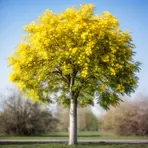
A tree or bush with yellow flowers and feathery leaves


 1
7.4
1
7.4
A tree with soft, showy pink flowers and feathery leaves that people plant in gardens

A small Asian tree with feathery leaves and pink silky flowers
Surface Forms
Morphology
Albizzia + julibrissin
This is a Latin binomial name composed of a genus (Albizzia) plus a specific epithet; knowing 'Albizzia' as a genus of tropical trees allows a learner to infer that Albizzia julibrissin is a type/species of that tree. The formation follows a regular, cross-linguistically recognizable taxonomic pattern (genus + species), so the basic meaning 'a kind of Albizzia tree' is directly derivable from the constituents.
Etymology
Albizzia julibrissin may get its name from two places: Albizzia after an Italian man named Albizzi who first sent the tree to Europe, and julibrissin from Persian words meaning 'silk flower', because the tree's pink, thread-like flower parts look like soft silk. That's why people call it the 'silk tree' today.