

Albizia julibrissin
- noun
- Specialized
- The Albizia julibrissin brightened the garden with its feathery pink blossoms each summer.
Examples
-
The city planted several Albizia julibrissin trees along the boulevard to enhance the urban landscape.
-
Gardeners often choose Albizia julibrissin for its elegant shape and decorative flowers.
-
Look at the Albizia julibrissin!
-
The Albizia julibrissin blooms beautifully in the spring.
-
Gardeners often choose Albizia julibrissin for its elegant shape and decorative flowers.
-
The Albizia julibrissin brightened the garden with its feathery pink blossoms each summer.
-
The city planted several Albizia julibrissin trees along the boulevard to enhance the urban landscape.
Synonyms
 1
6.6
1
6.6

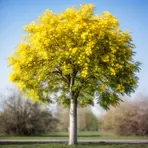
A tree or bush with yellow flowers and feathery leaves


 1
7.4
1
7.4
A tree with soft, showy pink flowers and feathery leaves that people plant in gardens

A small decorative tree from Asia with feathery leaves and clusters of pink, fluffy flowers
Surface Forms
Morphology
Albizia + julibrissin
This is a Latin binomial (genus + species epithet) rather than a semantic phrase in English; the parts are taxonomic labels, not compositional English words, and the species element 'julibrissin' has no transparent English meaning. A B1 learner who ‘knows’ the constituent forms would not be able to infer the common-name meaning (silk tree/mimosa), so the expression is not derivable from its parts.
Etymology
Albizia julibrissin gets its common names 'silk tree' and 'mimosa' because its pink flowers have long, silky flower threads that look like bits of silk. Its thin, feathery leaves also fold up like a sleeping plant, so the name helps you remember the pretty tree with soft, silk-like blooms.