

Albers-Schonberg disease
- noun
- /ˈæl.bɚz ˈʃoʊn.bɜrɡ dɪˈziːz/
- Specialized
 :
enfermedad de Albers-Schonberg
:
enfermedad de Albers-Schonberg
- The doctor diagnosed the patient with Albers-Schonberg disease after observing abnormally dense bones on the X-ray.
Examples
-
Children affected by Albers-Schonberg disease may experience bone pain and frequent fractures.
-
Research into treatments for Albers-Schonberg disease is ongoing due to the severity of its skeletal effects.
-
She has Albers-Schonberg disease.
-
Don't forget about Albers-Schonberg disease!
-
Children affected by Albers-Schonberg disease may experience bone pain and frequent fractures.
-
The doctor diagnosed the patient with Albers-Schonberg disease after observing abnormally dense bones on the X-ray.
-
Research into treatments for Albers-Schonberg disease is ongoing due to the severity of its skeletal effects.
Synonyms


 1
9.9
1
9.9
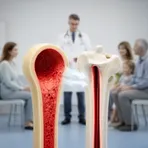
A rare disease passed from parents in which bones become too dense and can harm bone marrow
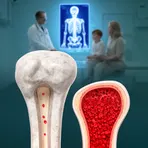
An inherited condition in which bones become very dense and hard, reducing the space inside bones for making blood cells
Surface Forms
Morphology
Albers-Schonberg + disease
This is an eponymous name + noun construction: knowing 'disease' makes it clear to a B1 learner that this refers to a particular illness, but the proper name 'Albers-Schonberg' carries no descriptive lexical meaning. Therefore the category (that it is a disease) is transparent but the specific clinical content (increased bone density, marrow obliteration) is not predictable from the constituents.
Etymology
Albers-Schonberg disease is named after two doctors, Albers and Schonberg, who first described it. They saw that people with the illness had very hard, dense bones, so today the name refers to an inherited disorder where bones grow thick and can press on the inside of the bone where blood is made.