

osteopetrosis


 1
9.9
1
9.9
- noun
- /ˌɑːstiəʊpəˈtroʊsɪs/
- Specialized
- Research on osteopetrosis is critical because it can provide insights into other bone disorders and treatments.
Examples
-
The diagnosis of osteopetrosis was confirmed by X-ray imaging showing unusually dense bones.
-
Can osteopetrosis lead to complications?
-
Researchers are studying genetic mutations responsible for osteopetrosis in hopes of finding a cure.
-
Treatment options for osteopetrosis are limited, often requiring careful management of symptoms.
-
The child was diagnosed with osteopetrosis at a young age.
-
The doctor explained that osteopetrosis causes the bones to become abnormally dense and may lead to serious complications.
-
Due to her diagnosis of osteopetrosis, she needed regular check-ups to monitor her bone health.
Synonyms

A disorder passed from parents that makes bones much denser and can fill the space inside bones
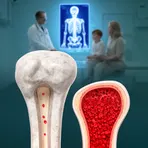
An inherited condition in which bones become very dense and hard, reducing the space inside bones for making blood cells
How Dense
- Specialized
1
9.9

- Specialized
- Specialized
1
7.4
- Specialized
34
6.1
Surface Forms
Morphology
osteopetrosis = osteo + petro (opaque) = osteo + petro + osis
The parts are specialized medical combining forms ('osteo-' 'petro-' and '-osis') that are not familiar to an average B1 learner, so the condition's meaning is not transparently derivable.
Etymology
The word osteopetrosis comes from Greek parts oste- 'bone', petros 'rock' as in petrify 'to turn to stone', and -osis 'condition'. So, it literally means 'bone like rock', which explains why the disease makes bones very dense and hard.