
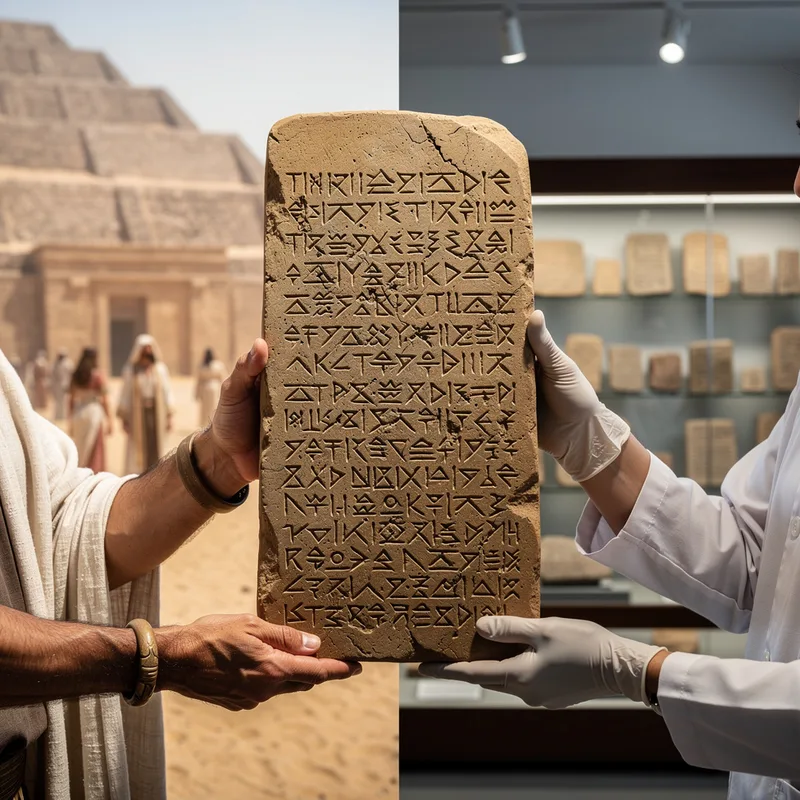
Akkadian
 3
9.9
3
9.9

- noun
- /əˈkeɪdiən/
- The team had concluded that an abrupt and devastating drought caused the collapse of the Akkadian Empire in 2200 B.C., ending four centuries of urban life at Tell Leilan in southern Mesopotamia.
- Akkadian Empire
Examples
-
The independent city-states survived until 2370 B.C.E., when the first external conqueror of the region, Sargon, established the Akkadian empire.
Academic text (1990) -
The Akkadian language was used in ancient texts dating back to the third millennium BCE.
-
Like the representations of the sun god, the Old Babylonian representations of the war goddess are derived from Akkadian prototypes.
Academic text (1993) -
He notes that the style of Hurrian personal names resembles that of the Akkadians.
Academic text (2008) -
A more schematic and factual Babylonian image has replaced the imaginative Akkadian representation.
Academic text (1993) -
The city's greatest and most enduring monuments were constructed in the period that followed the collapse of the Akkadian dynasty around 2050 B.C.
Academic text (2011) -
Around 2250 B.C., Sargon the Great made Ur part of his Akkadian empire, one of the world's first centralized states.
Academic text (2011) -
The queen may have been an Akkadian princess at a time when Akkad was at its height, extending from just south of Urkesh to the Persian Gulf, some 600 miles away.
Academic text (2008) -
Akkadian, a Semitic language distantly related to the modern Arabic now spoken there, gradually replaced Sumerian as Ur's language.
Academic text (2011) -
The tablets are inscribed in a script that is a hybrid of Akkadian, a Mesopotamian language, and Hurrian, which was probably the original language of what is today eastern Turkey and the Caucasus.
Academic text (2007)
Synonyms
A dead language that Assyrians spoke in ancient Mesopotamia
A language once used by the Assyrians in ancient Mesopotamia that is no longer spoken

A dead language once spoken by the Assyrian people in ancient Mesopotamia
A dead language once spoken in ancient Assyria
Compounds
- Specialized
A language once used by the Assyrians in ancient Mesopotamia that is no longer spoken
Surface Forms
Morphology
Etymology
Akkadian comes from the ancient city Akkad, so the name means 'from Akkad'. That's why Akkadian is the name of the old language people spoke in that part of ancient Mesopotamia.