
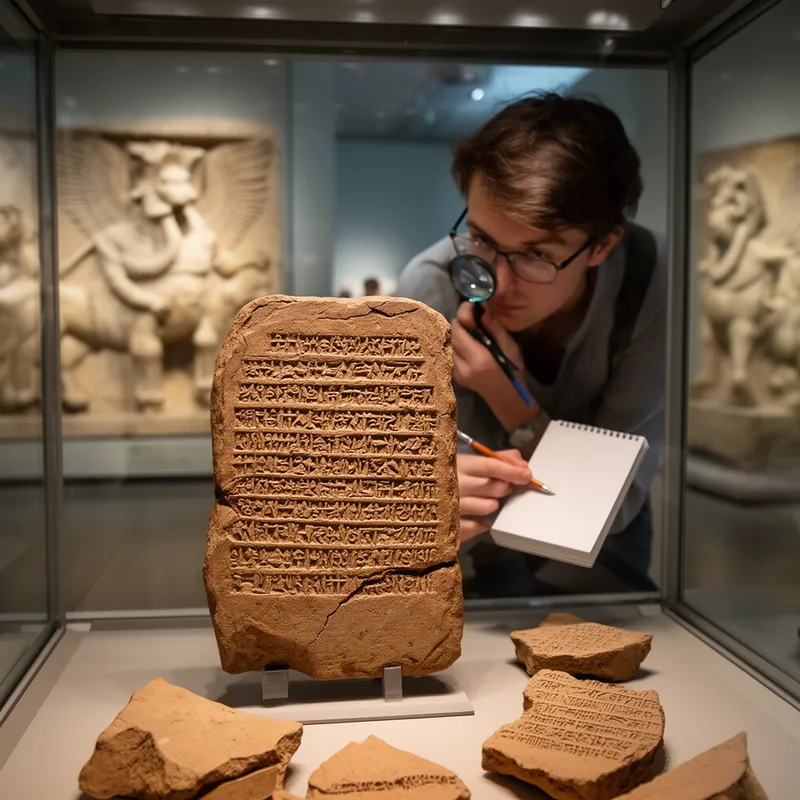
Assyrian
- noun
- /əˈsɪr.i.ən/
- The word in Assyrian for I is anaku.
Loading YouTube…
Watch on YouTubeIt's also very interesting because this is the only mention that we have a direct mention from scribal teaching in the old Assyrian.
- It's also very interesting because this is the only mention that we have a direct mention from scribal teaching in the old Assyrian.
Examples
-
Studying Assyrian can provide insights into the culture and history of ancient Mesopotamia.
-
Researchers found inscriptions written in Assyrian on clay tablets in the ruins.
-
I can spend many hours staring at utility bills knowing they are written in ancient Assyrian, but that studied concentration will magically enable me to understand why an energy company wants to steal increasingly large amounts of my money, even when the price of oil drops.
Blog text (8) -
The ancient Assyrian language has many similarities with Akkadian and Hebrew.
Synonyms

A dead language once spoken by the Assyrian people in ancient Mesopotamia

A dead language that Assyrians spoke in ancient Mesopotamia

A language once used by the Assyrians in ancient Mesopotamia that is no longer spoken
Compounds
- Specialized
A language once used by the Assyrians in ancient Mesopotamia that is no longer spoken
- Specialized
A dead language once spoken by the Assyrian people in ancient Mesopotamia

A modern form of Aramaic spoken by Assyrian people in northern Iraq and nearby areas

Modern forms of Aramaic spoken by Assyrian people today in Iraq, Syria, Iran, Turkey, and elsewhere
Surface Forms
Morphology
Assyrian = Assyria (transparent) = Assyria + ian
The language name is the adjectival/demonymic formation from 'Assyria' (place) using '-ian'; learners who know the place-name pattern can infer the relation.
Etymology
Assyrian used for the old language comes from the same place-name Aššur, so it literally meant the 'language of Assyria'. That is why Assyrian can mean the extinct Semitic tongue found in ancient inscriptions.

