
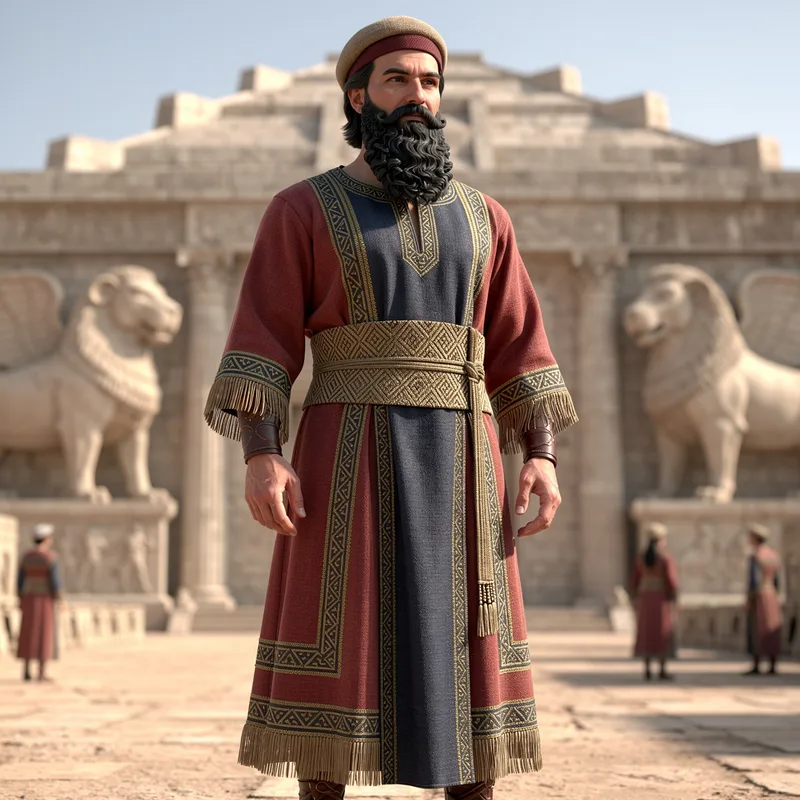
Assyrian
 5
8.2
5
8.2

- noun
- /əˈsɪr.i.ən/
- There is no connection between the names Syrian and Assyrian.
- Assyrians and Chaldeans
- Assyrians and Babylonians
- Assyrians and Armenians
Examples
-
In the eighth century BC, the Assyrians conquered the Northern Kingdom of Israel and sent its ten tribes into exile.
Academic text (1997) -
Many Assyrians are proud of their rich cultural heritage and history.
-
We now take up the subject of the Assyrians, where we left off yesterday.
-
In 722 B.C.E., the northern Kingdom of Israel fell to the Assyrians.
Academic text (2000) -
Erbil was conquered by the Assyrians, the Persians, and then Alexander the Great and his Greek army in 331 B.C.
Academic text (2006) -
The Assyrians did make occasional forays into northwestern Iran, focusing on what is now Iranian Kurdistan.
Academic text (2007) -
So it was in the history of ancient Israel, with the destruction of the northern kingdom of Israel by the Assyrians, the subsequent siege of Jerusalem, the defeat of Josiah by the Egyptians, and the destruction of Jerusalem by the Babylonians.
Academic text (1991) -
The Assyrians built some of the earliest empires in Mesopotamia, showcasing advanced architecture.
-
In ancient times, the Assyrians were known for their strong military and administrative skills.
Synonyms
 1
8.3
1
8.3
A person from the ancient region between the Tigris and Euphrates rivers
Compounds
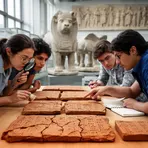
- Specialized
A language once used by the Assyrians in ancient Mesopotamia that is no longer spoken
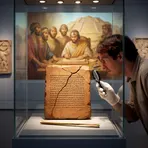

- Specialized
A dead language once spoken by the Assyrian people in ancient Mesopotamia

A modern form of Aramaic spoken by Assyrian people in northern Iraq and nearby areas

Modern forms of Aramaic spoken by Assyrian people today in Iraq, Syria, Iran, Turkey, and elsewhere
Surface Forms
Morphology
Assyrian = Assyria (transparent) = Assyria + ian
Formed by adding the adjectival/demonymic suffix '-ian' to the place name 'Assyria', making the relation clear to learners who know the place name.
Etymology
Assyrian comes from the ancient city and god Aššur, also written Assur, which was the centre of the old kingdom in Mesopotamia. So an Assyrian was originally a person from that place.