
Ahriman
 1
9.9
1
9.9

- proper noun
- /ˈɑːrɪmən/
- Literature
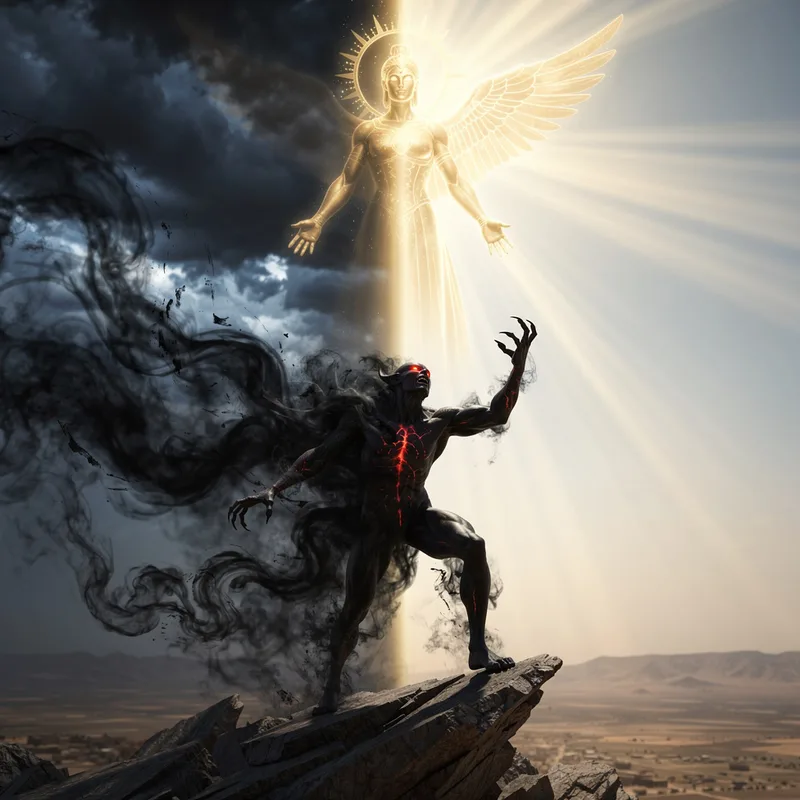
- This belief came via Zoroastrianism, the adherents of which believed in one God and were taught that the world was basically the battleground of two beings: Ahura Mazda, the God of Light, and Ahriman, who created this world of illusion and separation.
Examples
-
That still leaves Asmodeus, Ahriman, Lilith.
-
The Heart of Ahriman.
-
The difference lies in the conception of the cosmic forces of Ahuramazda and Ahriman, good and evil, respectively.
Academic text (1994) -
The Gnostics were bitterly persecuted because they believed this world was created by a 'lesser God,' called Ahriman.
Blog text (5) -
In the reliefs depicting the coronation of Arrashir I and Shapur I, Ahriman is seen as the enemy of the mounted kings; the kings are represented by Ahuramazda himself.
Academic text (1994) -
In Zoroastrianism, Ahriman represents the spirit of evil who constantly opposes the good spirit, Ormazd.
-
Many followers of Zoroastrianism fear Ahriman as the personification of darkness and chaos.
-
According to ancient texts, Ahriman is seen as the chief adversary of Ormazd, embodying all that is evil.
Synonyms
 321
4.2
321
4.2
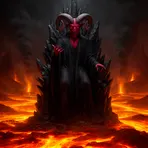
A main evil spirit in some religions who tempts people and rules Hell
 11
9.9
11
9.9
A powerful evil being in stories, games, or religious texts

A spirit of evil and chaos who fights the good god Ahura Mazda
Surface Forms
Etymology
Ahriman comes from an ancient Persian name Angra Mainyu, which breaks into angra meaning 'destruction' and mainyu meaning 'spirit'. So Ahriman literally means a 'destructive spirit', which explains why he is the dark, evil enemy in Zoroastrian stories.