
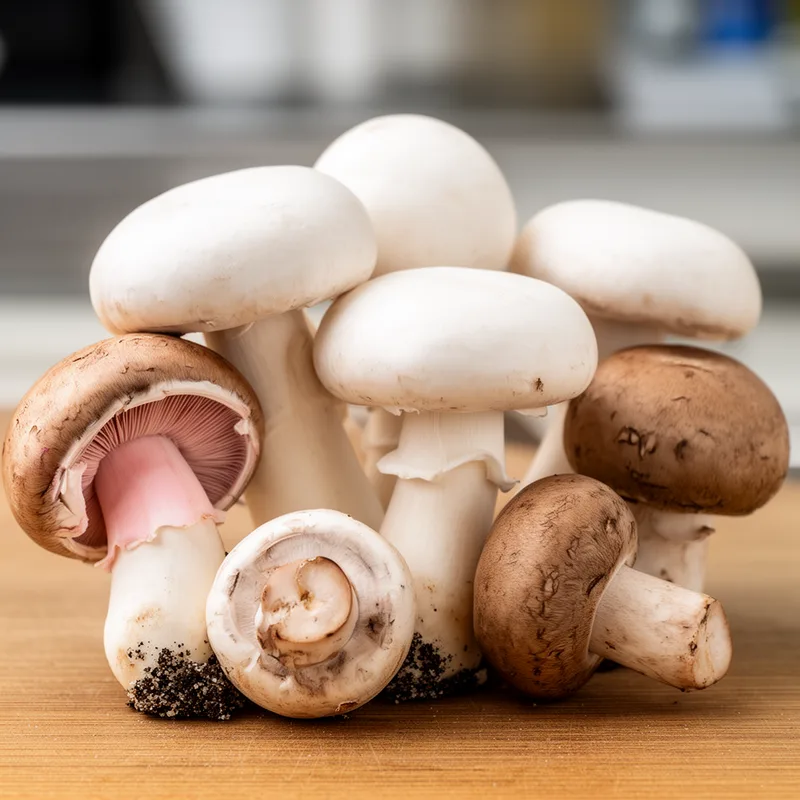
Agaricus
- noun
- /əˈɡɛrɪkəs/
- Specialized
- Agaricus mushrooms, commonly found in grocery stores, are a great source of vitamins and minerals.
Examples
-
Many chefs prefer using Agaricus bisporus for its mild flavor and versatility in various dishes.
-
Agaricus lanipes.
-
Khombi, dhingri, and guhchi are better known to us as morels, chanterelles, and Agaricus campestris, the common field mushroom from which supermarket mushrooms were derived.
Academic text (1990) -
In culinary arts, Agaricus species are valued for their texture and are often included in salads and stir-fries.
Synonyms

A group of mushrooms with gills and brown spores that includes common edible species
Compounds

- Specialized
An edible mushroom that grows in grassy fields and is often grown for food
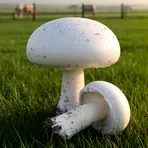
- Specialized
A large white mushroom with a hollow stem that grows in fields and you can eat
- Specialized
A group of mushrooms with gills and brown spores that includes common edible species
Surface Forms
Morphology
Etymology
Agaricus comes from the Greek agarikon, which meant 'a kind of mushroom', and it is also the source of the English word agaric. Scientists used that old name as the Latin name for a group of gilled mushrooms, which is why Agaricus now names many common edible mushrooms.

