

Agaricus campestris
- noun
- /əˈɡɛrɪkəs kæmˈpɛstrɪs/
- Specialized
- Many people enjoy foraging for Agaricus campestris in grassy fields during the fall.
Examples
-
Agaricus campestris is a common edible mushroom used in many salads and pasta dishes.
-
When cooked properly, Agaricus campestris has a delicious, savory flavor that enhances various meals.
-
Khombi, dhingri, and guhchi are better known to us as morels, chanterelles, and Agaricus campestris, the common field mushroom from which supermarket mushrooms were derived.
Academic text (1990)
Synonyms

A common white mushroom that grows in fields and people eat
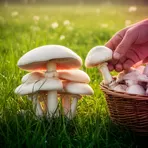
An edible mushroom that grows in grassy places
Surface Forms
Morphology
Agaricus + campestris
This is a Latin scientific name (taxonomic binomial) rather than an ordinary English phrase; the second element 'campestris' is a Latin adjective (not a common English word) and is not listed in the provided dictionary entry. An average B1 learner who knows the English word 'mushroom' but not Latin roots would not be able to derive 'field mushroom' from 'Agaricus campestris'; only learners familiar with Latin/Romance roots or biological nomenclature could infer the meaning.
Etymology
Agaricus campestris comes from old Latin words: Agaricus was a word for 'mushroom' and campestris means 'of the fields'. So the name literally means 'field mushroom', which explains why it refers to the common edible mushroom that grows in grass and fields.

