
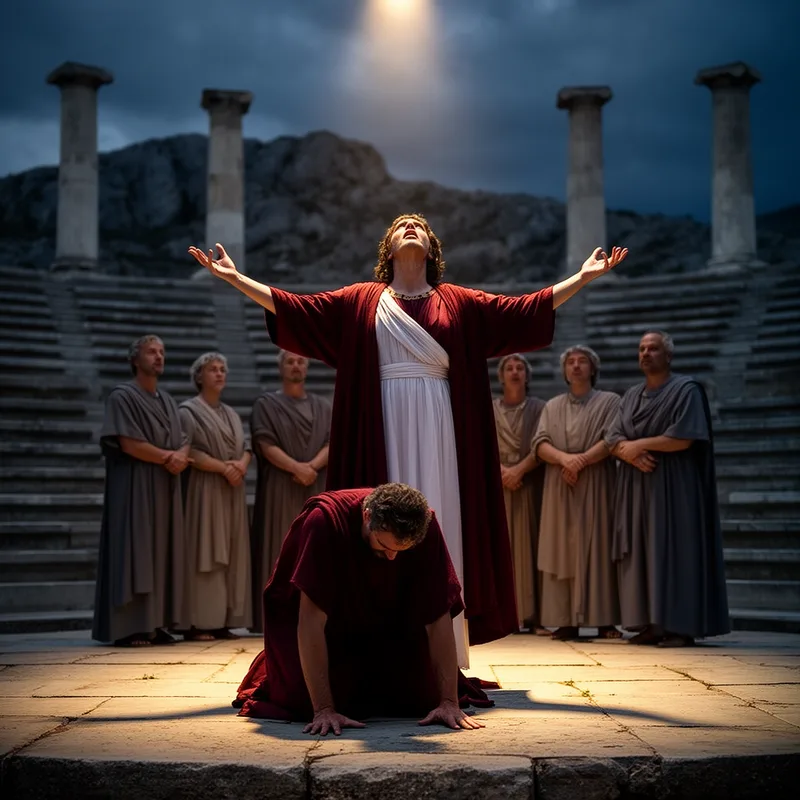
Aeschylean
- adjective
- /ˌiːs.kɪˈliː.ən/
- Literature
- Critics praised the Aeschylean themes of fate and justice in the new production.
Examples
-
The play's structure was distinctly Aeschylean, reflecting the grandeur of ancient Greek tragedy.
-
Her writing style has an Aeschylean quality, focusing on deep moral conflicts.
-
The play had an Aeschylean quality.
-
Many scholars admire the Aeschylean themes.
-
Critics praised the Aeschylean themes of fate and justice in the new production.
-
The play's structure was distinctly Aeschylean, reflecting the grandeur of ancient Greek tragedy.
-
Her writing style has an Aeschylean quality, focusing on deep moral conflicts.
Surface Forms
Morphology
Etymology
Aeschylean comes from the name Aeschylus, a famous ancient Greek writer of tragic plays where 'fate', 'gods' and deep moral conflicts are central. So to call something Aeschylean is to say it reminds you of those grand, serious themes and the tragic style of his plays.

