
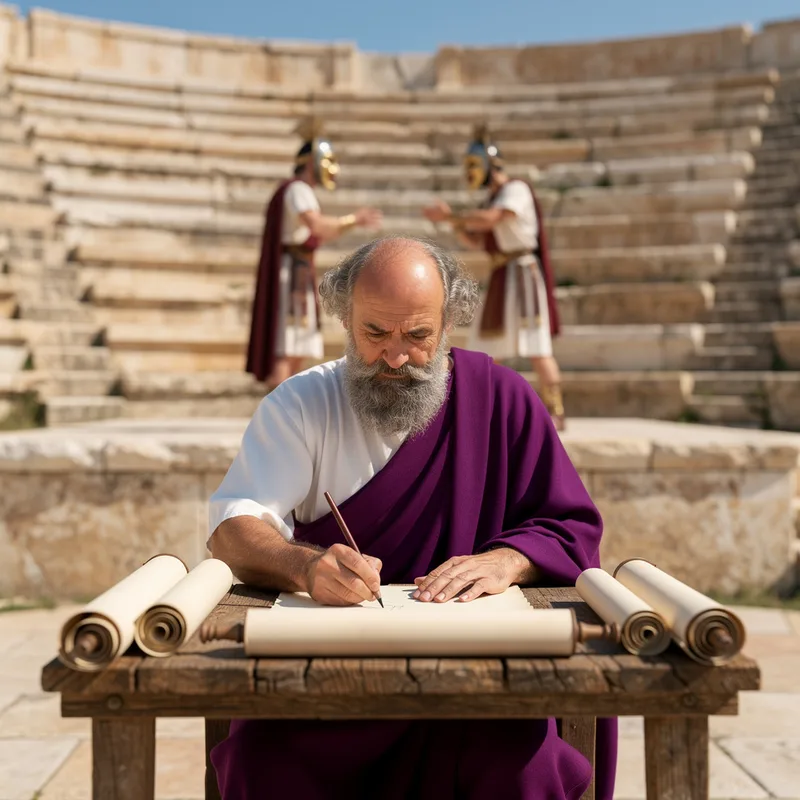
Aeschylus
 3
9.9

- proper noun
- /ˈiːskɪləs/
- Literature
- Many consider Aeschylus to be the father of Greek tragedy due to his influential works.
- Aeschylus versus Euripides
- Aeschylus and Sophocles
- Aeschylus and Herodotus
Loading YouTube…
Watch on YouTubeAnd then I would say Aeschylus, as did Euripides.
- And then I would say Aeschylus, as did Euripides.
Examples
-
Aeschylus probably fought in the Battle of Salamis and was thus an eyewitness.
Academic text (1994) -
The Oresteia is a group of three plays written by the first great Greek tragic dramatist, Aeschylus, in 458 BCE, when Athens was at the height of its civic and artistic glory.
Academic text (2006) -
In these plays, Aeschylus gives us a myth about the origin of the justice system, the very system the West later inherited.
Academic text (2006) -
"You are well educated and no doubt think of Seven Against Thebes, by the Greek tragedian Aeschylus."
Fiction book (2002) -
The ancient Greek playwright Aeschylus is famous for crafting profound tragedies, including 'The Oresteia.'
-
In his plays, Aeschylus explored themes of justice and fate that resonate even today.
Surface Forms
Etymology
Aeschylus is the name of an ancient Greek playwright and comes from an old Greek name Aiskhylos, which is linked to the word 'shame'. That's why his plays often focus on guilt, honour and the strong feelings that drive tragic stories.