
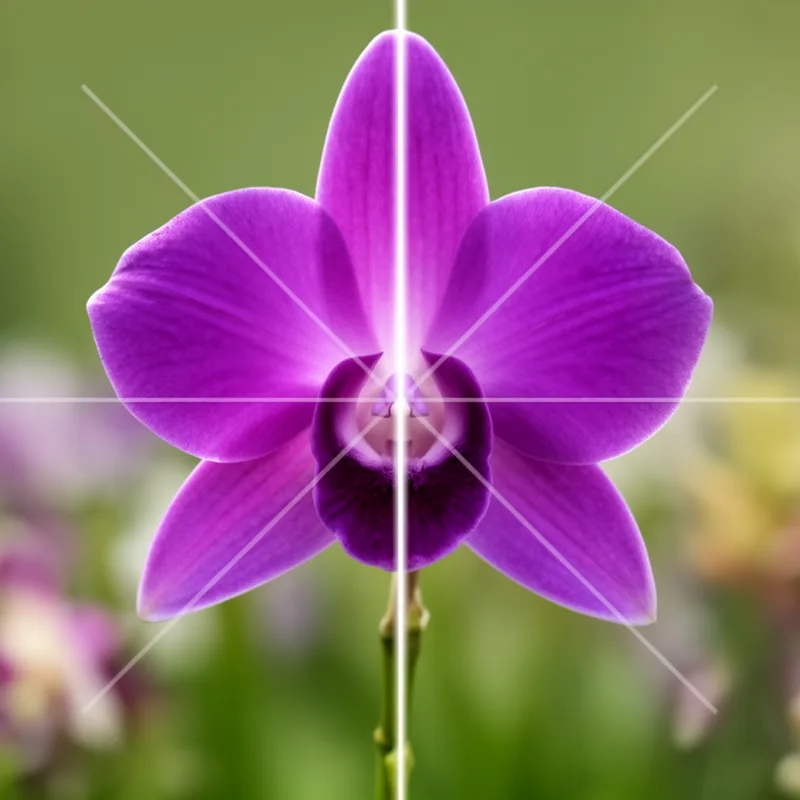
zygomorphic
- adjective
- /ˌzaɪɡəˈmɔrfɪk/
- Specialized
- The orchid is an example of a zygomorphic flower, as it can only be divided symmetrically in one way.
Examples
-
Unlike actinomorphic flowers, those that are zygomorphic show bilateral symmetry.
-
The zygomorphic flower is beautiful.
-
Many legumes bear zygomorphic flowers, which are adapted for pollination by specific insects.
-
Many orchids are zygomorphic in structure.
-
The orchid is considered zygomorphic because its floral structure can be divided into symmetrical halves along one plane.
-
Many members of the legume family exhibit zygomorphic characteristics, allowing for unique pollination mechanisms.
-
Botanists often study zygomorphic flowers to understand how symmetry influences plant reproduction.
Synonyms

A flower that splits into two equal mirror halves with one straight cut down the middle

Having two matching halves on each side of a middle line
Antonyms

- Specialized
A flower that can be divided into similar halves by any line through its center
How Symmetrical


Surface Forms
Morphology
zygomorphic = zygomorph (opaque) = zygo + morph + ic
The adjective is formed by the regular addition of the suffix '-ic' to the specialized base 'zygomorph'.
Etymology
Zygomorphic comes from Greek parts zygo ('yoke' or 'joined') and morphic ('shape'), so imagine a yoke joining two matching halves. That's why a zygomorphic flower has two matching sides and can only be split into equal left and right halves in one way.