

yeomanry


 1
9.9
1
9.9
- noun
- /ˈjəʊmənri/
- UK
- The yeomanry played an important role in local defense during times of crisis.
- yeomanry regiment
- county yeomanry
- local yeomanry
Examples
-
That is for the Yeomanry, this is for Colonel L'Estrange.
-
Cannot you see they are attacking the Yeomanry?
-
You have your Manchester and Salford Yeomanry - at your disposal.
-
"Sergeant, 7th Battalion, Imperial Yeomanry."
-
Colonel Fletcher, just where are the Manchester and Salford Yeomanry?
-
I am speaking of t'Manchester and Salford Yeomanry, sir.
-
The Yeomanry is here.
-
As member of the United Friars, Herring was captain of the Norfolk Yeomanry and Volunteer Company of King Street.
-
It happened to be the stripe of the Royal Glasgow Yeomanry, a regiment of which I doubted he had ever been a member.
Fiction book (1992) -
Many members of the yeomanry trained rigorously to prepare for their duties.
Synonyms
 150
6.0
150
6.0
Soldiers who fight on horses or in armored vehicles
 1
7.2
1
7.2
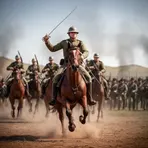
Soldiers who fight while riding horses in wars before vehicles were common
Surface Forms
Morphology
Etymology
Yeomanry comes from yeoman, a word for a free, often small landowner or 'reliable farmer', and the ending -ry meaning 'group' or 'class'. Because these local landowners formed volunteer horse soldiers, yeomanry came to mean the British volunteer cavalry force.