

yam bean
- noun
- /jæm biːn/
- Many farmers grow yam beans for their edible roots.
- yam bean tubers
- species of yam bean
Examples
-
In traditional dishes, the yam bean is often added for its crisp texture and unique flavor.
-
Farmers cultivate yam beans both for their edible tubers and for the rotenone found in their pods.
-
The yam bean can be eaten raw or cooked and has a sweet, crunchy texture.
-
The young pods of the yam bean must be thoroughly cooked before consumption.
-
The yam bean is a unique plant native to the Americas.
-
Farmers in tropical regions cultivate yam beans for their nutritious tubers, which are a staple food.
-
To improve soil quality, some farmers plant yam beans in rotation with other crops.
Synonyms
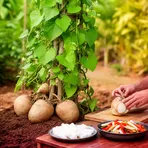
A climbing tropical plant with large crisp roots eaten raw or cooked as a vegetable
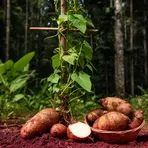
A climbing plant with large edible roots grown in the Amazon

A tropical climbing plant from the Amazon with large edible roots that people cook and eat
Surface Forms
Morphology
This is a straightforward noun–noun compound whose meaning (a plant associated with yams and beans, i.e. an edible root-producing leguminous/tuberous plant) can be inferred from the constituents. The referent is compositional and follows common naming patterns for plants, so a B1 learner who knows "yam" and "bean" would reasonably guess it denotes a plant with yam-like edible roots.
Etymology
The name yam bean may come from a simple picture: a climbing bean plant that makes a large, edible yam-like root, so people put the two words together. That's why the name means a 'bean plant grown for its edible root'.

