
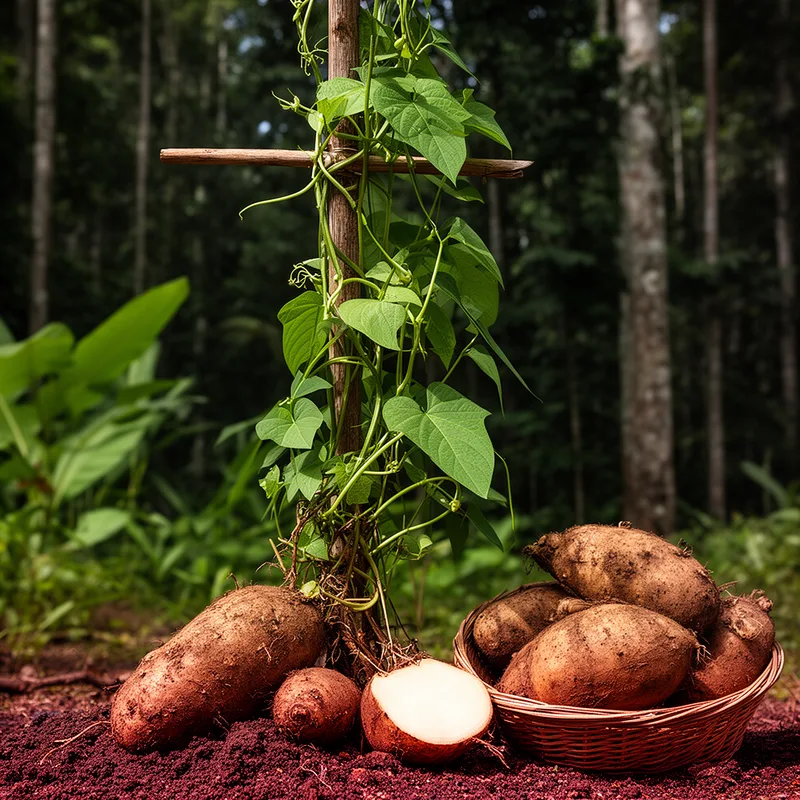
Pachyrhizus tuberosus
- noun
- Specialized
- The indigenous people cultivated Pachyrhizus tuberosus for its nutritious roots.
Examples
-
Local markets often sell the tubers of Pachyrhizus tuberosus as a staple food.
-
Have you ever tried Pachyrhizus tuberosus in a salad?
-
Researchers are studying Pachyrhizus tuberosus for its potential in sustainable agriculture.
-
The Pachyrhizus tuberosus is often grown for its tasty tubers.
-
Local markets often sell the tubers of Pachyrhizus tuberosus as a staple food.
-
The indigenous people cultivated Pachyrhizus tuberosus for its nutritious roots.
-
Researchers are studying Pachyrhizus tuberosus for its potential in sustainable agriculture.
Synonyms

A tropical climbing plant from the Amazon with large edible roots that people cook and eat
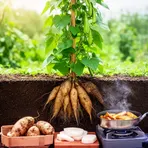
A climbing plant grown for its large edible roots eaten raw or cooked
Surface Forms
Morphology
Pachyrhizus + tuberosus
This is a standard botanical binomial combining the genus name 'Pachyrhizus' (a vine with edible tubers) with the Latin adjective 'tuberosus' (meaning 'tuberous' or 'having tubers'). The compound meaning — a Pachyrhizus plant characterized by tuberous roots — is directly derivable from the constituents and follows a cross-linguistically common naming pattern, so it is transparent to learners who know the parts.
Etymology
Pachyrhizus tuberosus comes from Greek and Latin parts: pachy- meaning 'thick', rhizus meaning 'root', and tuberosus meaning 'having tubers'. This name creates a picture of a climbing plant with large, edible roots, so it fits the plant we use and study today.

