
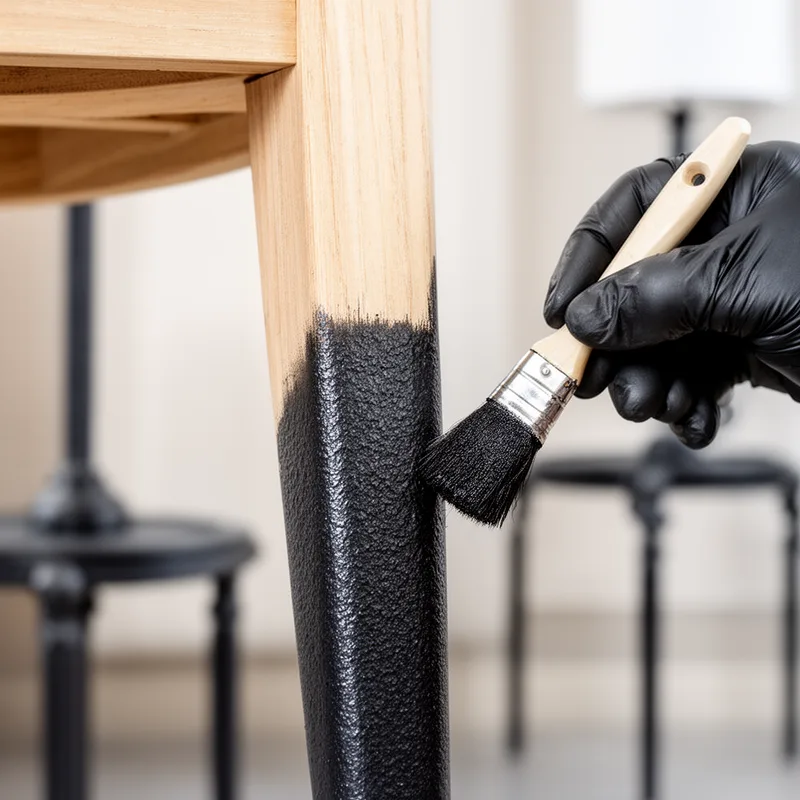
wrought iron


 1
4.8
1
4.8
- noun
- /rɔt ˈaɪərn/
- The new garden gate has a beautiful wrought iron finish that adds elegance to the property.
Examples
-
I tried the remote view, rattled off whatever was shown: wrought iron, northeast, 1400, family starts with C.
Fiction book (1993) -
Wrought iron, plaster of Paris, brass polish, varnish, steel wool, and sawdust.
Fiction book (2000) -
The fence was gracefully landscaped and painted flat black to resemble wrought iron, but no cosmetic effort could disguise the thickness of the metal or its twelve-foot height.
Fiction book (1990) -
She decorated her patio with a table set in wrought iron, giving it a classic look.
-
This chandelier is made of wrought iron, providing a sturdy and stylish design for the dining room.
How Like Wrought Iron
1
4.8
 1
4.7
1
4.7
Surface Forms
Morphology
The meaning 'iron that has been worked or shaped' is directly derivable from combining 'wrought' (worked/shaped) with 'iron' (the metal). Although 'wrought' is somewhat less frequent/archaic in usage, the adjective+noun composition transparently denotes iron that has been worked, a pattern that is cross-linguistically common and therefore accessible to a B1 learner who knows both constituents.
Etymology
Wrought iron as a finish borrows its name from real wrought iron, because makers wanted to copy the dark, slightly rough look of metal beaten by hammer. So the term now also means a 'paint or coating' that gives furniture and fixtures an aged metal look.