
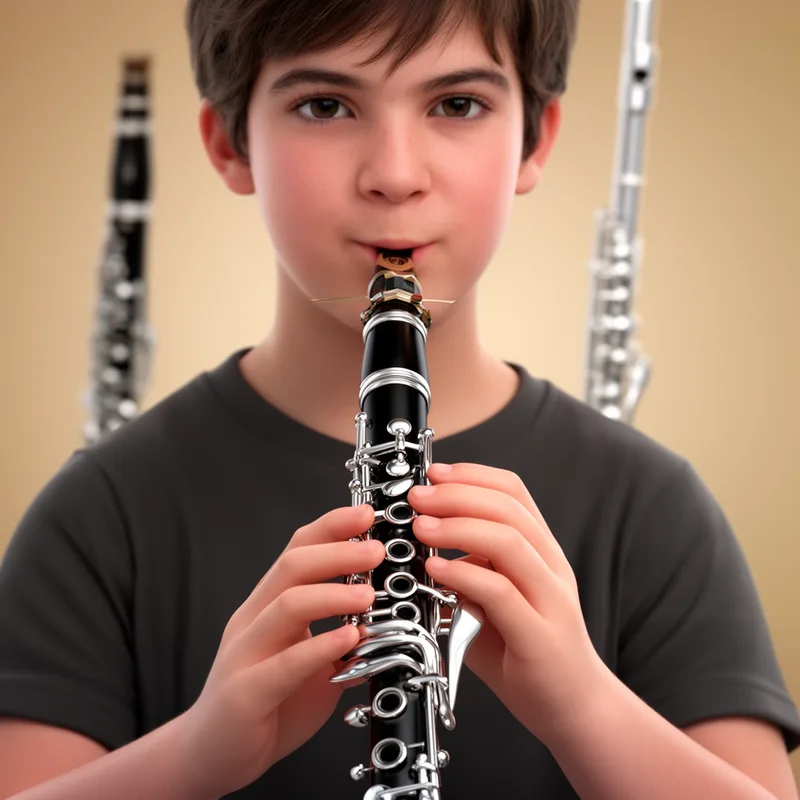
woodwind instrument


 1
3.6
1
3.6
- noun
- /ˈwʊdˌwɪnd ˈɪnstrəmənt/
- She plays the woodwind instrument known as the saxophone in the school band.
- use woodwind instruments
Examples
-
Because the pitch of woodwind instruments changes slightly as the wind pressure changes, there are also small variations in pitch associated with this type of vibrato.
Academic text (1994) -
Europeans have been using it for centuries in the production of reeds for woodwind instruments.
Blog text (26) -
Flutes, oboes, saxophones, and bassoons are the only woodwind instruments on which performers commonly use vibrato.
Academic text (1994) -
Flutes, clarinets, and oboes are all types of woodwind instruments commonly found in orchestras.
-
To create beautiful melodies, you need to master a woodwind instrument like the flute or the clarinet.
Synonyms
 3
4.2
3
4.2
An instrument that makes sound when you blow into or across it, like a flute
Surface Forms
Morphology
The phrase is directly compositional: 'woodwind' denotes air‑blown instruments (wood + wind) and 'instrument' denotes a musical device, so a B1 learner who knows the constituents can infer it refers to a musical instrument played by wind (e.g. flute, clarinet). This categorisation is common across languages and follows standard noun+noun composition, making the meaning immediately derivable from the parts.
Etymology
Woodwind instrument comes from the simple picture of an instrument made of wood and played with wind, the player's 'breath'. So, it now means any instrument that makes sound when you 'blow' air through it, even though some modern ones are metal.