

woodpecker
 21
1.4
21
1.4

- noun
- /ˈwʊdˌpɛkər/
- Invisible through the leaves, a woodpecker drilled a maple trunk.
- the red-cockaded woodpecker
- the ivory-billed woodpecker
- the cockaded woodpecker
Examples
-
One of the largest and most impressive woodpeckers found in this area is the Pileated Woodpecker.
Blog text (20) -
We spotted a beautiful woodpecker pecking at a dead tree in the forest.
-
A woodpecker is right now trying to put a hole in my office.
-
Only a very small woodpecker succeeded in breaking through it.
Academic text (2016) -
There are no woodpeckers on all three of these islands.
-
We lost a huge project last year because of the red-headed woodpecker.
-
One day when Mary was walking in the forest, she met a woodpecker named Peck and an owl named Who.
Fiction book (1998) -
From far away, I could hear the staccato drill of a Nuttall's woodpecker.
Fiction book (1990) -
A crow clacked at some distance inland, then the drumming of a woodpecker came across the water.
Fiction book (2002) -
The Choctawhatchee River is one place where ivory-billed woodpeckers have reputedly been sighted.
Academic text (2008)
Synonyms
 1
7.4
1
7.4
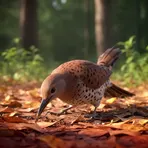
A large woodpecker with brown spotted feathers that often feeds on the ground
 1
9.9
1
9.9
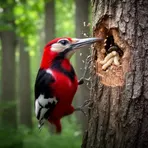
A bird with a strong beak that pecks wood to find insects

 1
9.9
1
9.9
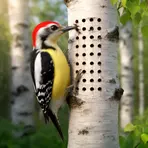
A small woodpecker with a pale yellow belly that drills rows of holes in trees to eat sap and insects

A small North American bird with black and white feathers that pecks trees for insects

A small black and white bird that pecks holes in trees
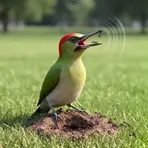
A greenish bird that eats ants and makes a loud laughing call

A medium-sized North American bird that pecks tree trunks, with black and white feathers and a bright red head

A North American woodpecker with black-and-white body and a red head and neck
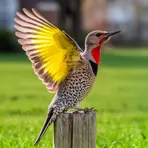
A large woodpecker with yellow feathers under its wings and tail and a red patch on its neck

A small woodpecker from Europe and Asia that twists its neck like a snake when scared
Compounds
 2
9.9
2
9.9
A large black and white bird with an ivory colored bill that is very rare and may be extinct
A small North American bird with black and white feathers that pecks trees for insects
A medium-sized North American bird that pecks tree trunks, with black and white feathers and a bright red head
Surface Forms
Morphology
Etymology
The word woodpecker comes from two plain English parts: wood ('tree') and peck ('to pick or strike with the beak'). So a woodpecker is literally 'one who pecks wood', which explains why the bird taps and makes holes in trees to find insects.