

without a scratch
 11
2.7
11
2.7

- idiom
- Informal
- She fell off her bike but got up without a scratch.
- walked away without a scratch
- escaped without a scratch
- survived without a scratch
Loading YouTube…
Watch on YouTubeWould you rather be able to say that you rode on an alligator without a scratch or wrestled a shark without a bite?
- Would you rather be able to say that you rode on an alligator without a scratch or wrestled a shark without a bite?
- That's the killing us whole line and I'm I'm go to there and I come out without a scratch.
Examples
-
All his mates who worked the motor pool came home without a scratch.
-
Still not included in this astounding report are the survivors such as Andrew Jackson, Franklin Roosevelt, Harry S. Truman, and Gerald Ford, all of whom escaped without a scratch.
Blog text (29) -
Yo, bring my car back without a scratch.
-
Bring that back without a scratch on her, you got it?
-
The girl comes out without a scratch.
-
And I promise we'll bring it back... without a scratch.
-
And yet this boy can get in and out without a scratch.
-
Remarkably, I escaped without a scratch.
-
His heart was pounding like crazy, but he had survived without a scratch.
Fiction book (1999) -
And the Gorn escaped without a scratch.
Synonyms
 44
2.1
44
2.1
Not hurt or damaged after a dangerous event
 7
1.0
7
1.0
Not physically injured after an accident or dangerous event
 7
1.8
7
1.8
Not hurt physically

Not having scrapes or small cuts on the skin

To not be hurt or blamed after a risky event
Antonyms
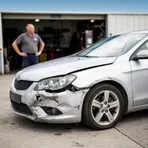
How Damaged

Surface Forms
Morphology
The meaning 'without suffering any injury or damage' is directly and compositionally derived from 'without' (lack of), the article 'a', and 'scratch' (a small mark or wound), so a B1 learner who knows the constituents can infer there was not even a small injury. This construction follows a common cross-linguistic pattern expressing absence and involves no idiomatic or metaphorical shift, making it readily understandable.
Etymology
Without a scratch comes from the simple image of something that goes through danger but stays without even a small scratch on its surface. That's why we say it to mean 'not hurt' or 'not damaged'.