
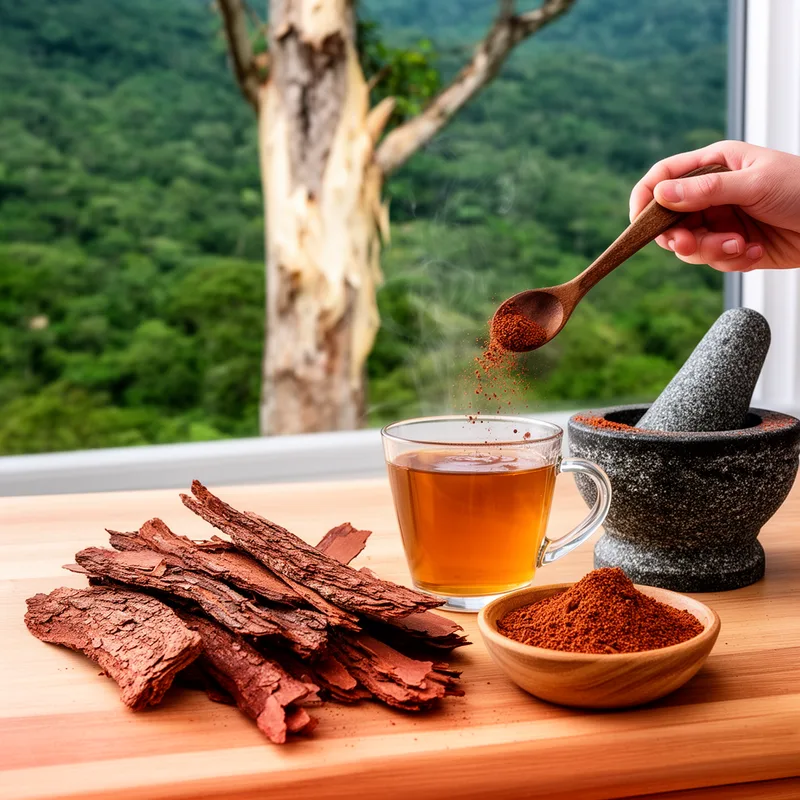
winter's bark
- noun
- /ˈwɪntərz bɑrk/
- Literature
- An herbalist recommended adding powdered winter's bark to tea for its stimulating effect.
Examples
-
Early explorers used winter's bark to prevent scurvy during long sea voyages.
-
The spicy taste of winter's bark made it popular in traditional medicine.
-
I found some winter's bark in the herbal shop.
-
The winter's bark has a strong, pleasant aroma.
-
An herbalist recommended adding powdered winter's bark to tea for its stimulating effect.
-
Early explorers used winter's bark to prevent scurvy during long sea voyages.
-
The spicy taste of winter's bark made it popular in traditional medicine.
Synonyms


 1
9.9
1
9.9
The inner bark of a tree used like cinnamon to flavor food and to make people feel better
 1
3.0
1
3.0
Dried tree bark with a warm, sweet smell used as a cooking spice

A strong smelling inner bark from a small Caribbean tree used as a spice and medicine

A fragrant bark from a small shrub used to make incense and health drinks

Bitter bark from a South American tree that flavors drinks and medicines
Bitter bark from a South American tree used to flavor drinks and medicines
Bark from a tree used as a spice that smells like cinnamon and tastes stronger
Surface Forms
Morphology
winter's + bark
This is a lexicalized plant name whose meaning (a specific South American evergreen and aromatic medicinal/spice bark) cannot be derived from the literal parts. Knowing 'winter' and 'bark' would at best suggest a seasonal or tree-related notion, but would not allow a B1 learner to predict the species identity or its culinary/medicinal uses; plant names are often arbitrary across languages, making this opaque.
Etymology
Winter's bark may come from stories of sailors and herbalists who used the tree's strong, spicy bark during cold months to warm people and help with illness. Because this useful bark was kept and used in winter voyages, the name joined winter and bark and came to mean the aromatic 'remedy' and 'spice'.